When I was still in Chicago, I worked with a guy named Robert Irving III, while I was employed by Guitar Center. "Baabe" as he was nicknamed had played keyboards for Miles Davis during the 80s. Robert produced two Miles Davis albums ("Decoy" and "You're Under Arrest").
During that time, I had the opportunity to play some of my original instrumental music. To my pleasure, he agreed to write a letter of recommendation for my music when I asked him to do so. (As Jesus said, "Ask and you shall receive." If you don't ask, people rarely ever volunteer to write such letters.)
To get an idea of the musical talents Robert Irving III had, and why Miles Davis deemed him worthy of working for him as his "Musical Director", check out the following web addresses, including some YouTube videos of the band in concert.
http://youtu.be/ZY-H_rto3Kg
http://youtu.be/axe12AFkI5Q
Note: I'm running out of time at the Internet cafe, so I'll add more links to this post later.
The following text was copied and pasted from the following web site: http://jazzzology.blogspot.com/2009/08/robert-baabe-irving-iii-jazz-homage-to.html. It pertains to a concert I attended while still living in Chicago.
The Jazz Institute of
Chicago presents "Sketches of Brazil: Robert
Irving III's Orchestral Homage to Miles and Gil" in Chicago and its
free!!! I have been a fan of "Baabe" for a long time and have seen him
play/conduct at various venues around Chicago...he never fails to delight and
this event should be another one he delivers on with his unique brand of
"musicality"...don't miss this!
Thursday, August 13th
6:30
PM
FREE
Millennium Park: Jay Pritzker Pavilion
Composer, pianist
and educator Robert Irving III conducts the newly formed Sonic Portraits
Orchestra in the world premiere of Sketches of Brazil, an orchestral homage to
his mentors, Miles Davis and Gil Evans. The concert features Robert Irving III
(composer, conductor, piano); Sonic Portraits Orchestra (a blend of 33 classical
and jazz musicians); Wallace Roney (trumpet, flugelhorn); Fareed Haque (guitar),
Dede Sampaio (percussion), Felipe Fraga (percussion), Charles Heath (percussion)
and Miles Evans (trumpet).
Special panel: Earlier that day from noon to
1:30 pm, the Chicago Cultural Center hosts a panel "50 Years from Sketches of
Spain to Sketches of Brazil: A Symposium on the legacy of Miles Davis & Gil
Evans" in the Claudia Cassidy Theater. Admission is free and open to the public.
Professor Fareed Haque moderates a conversation with Sketches of Brazil
composer/arranger Robert Irving III. Additional panelists include Wallace Roney,
Vince Wilburn Jr. (nephew of Miles Davis), Miles Evans (son of Gil Evans), Dede
Sampaio and Felipe Fraga.
NOTE
http://secretjazz.com/baabe.htm contains more detailed information re: Baabe Irving III.
Thursday, May 24, 2012


Tuesday, May 01, 2012
Justice And the Church
Today I went to Fred Meyer to get a refill on my prescription, which is necessary if I want to avoid another stroke. While there, I saw a rack of video DVDs. There were some cool titles, but I wanted to feel that I'd really gotten my money's worth, so I chose carefully.
Ever since I moved to Bellingham, I'd had an extra interest in the Civil War, on account of the fact that Bellingham had a strong connection to George Pickett, well known for Pickett's Charge at the Battle of Gettysburg. Pickett had lived in Bellingham (when it was still a fort), and in fact, the home in which he lived at that time in his life is within easy walking distance of the Lighthouse Mission, where I currently sleep at night. It's the oldest house in Bellingham, I have learned. There is also a bridge, within easy walking distance, which Pickett built. It crosses over a small but rather boisterous creek which leads to a salmon fishery.
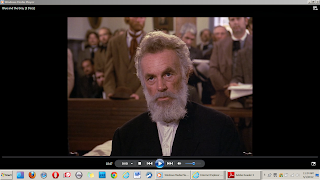
To make a long story short, I decided to buy a 3 DVD set of the movie "The Blue and The Gray". It had a wonderful cast of famous actors, including Stacy Keach, Gregory Peck, Lloyd Bridges and others. It cost me $10, but I regard that as money well spent.
Watching the movie, I am reminded that the Civil War took place, in part, because some men (such as John Brown) regarded the words of the Bible as relevant to the issue of slavery issue in a way which obligated them to fight for the purpose of defending the rights of innocent human beings ... and because others who also considered themselves to be Christians saw fit to defend and rationalize the practice of slavery. That episode in the history of America, and in the history of the Christian church, was shameful.
We would love to think that such things are behind us, and that we "enlightened" people would never do such things anymore. But my own recent experiences when dealing with my brothers and sisters in the faith have persuaded me that nothing much has changed in certain crucial respects.
Morally obtuse people in power, even in the church, somehow manage to continue to rationalize policies and practices and attitudes which are utterly contrary to the values taught and demonstrated by Jesus Christ when he walked the earth.
David Wilkerson, who founded Teen Challenge, was a great influence on my life. Sadly, before he died, he presented a message he called "Anguish". He looked at the current state of the church, and he did not like what he saw. If he had lived in the days prior to the Civil War, I suspect that he would have felt the same way, just as I do.
It breaks my heart when I consider the potential which exists in the church, and when I consider how far we still have to go in terms of achieving the goal of living lives which conform to Christ's expectations. Healing of relationships can never take place unless and until we repent of our shared guilt. Yes, God can and does forgive, but there can be no forgiveness without contrition and true repentance. Our life legacies will depend, in part, on whether or not we stood up for true righteousness and justice.
The issues of the day change from era to era, but the fundamental need for true discipleship and humility remains.
Ever since I moved to Bellingham, I'd had an extra interest in the Civil War, on account of the fact that Bellingham had a strong connection to George Pickett, well known for Pickett's Charge at the Battle of Gettysburg. Pickett had lived in Bellingham (when it was still a fort), and in fact, the home in which he lived at that time in his life is within easy walking distance of the Lighthouse Mission, where I currently sleep at night. It's the oldest house in Bellingham, I have learned. There is also a bridge, within easy walking distance, which Pickett built. It crosses over a small but rather boisterous creek which leads to a salmon fishery.
To make a long story short, I decided to buy a 3 DVD set of the movie "The Blue and The Gray". It had a wonderful cast of famous actors, including Stacy Keach, Gregory Peck, Lloyd Bridges and others. It cost me $10, but I regard that as money well spent.
Watching the movie, I am reminded that the Civil War took place, in part, because some men (such as John Brown) regarded the words of the Bible as relevant to the issue of slavery issue in a way which obligated them to fight for the purpose of defending the rights of innocent human beings ... and because others who also considered themselves to be Christians saw fit to defend and rationalize the practice of slavery. That episode in the history of America, and in the history of the Christian church, was shameful.
We would love to think that such things are behind us, and that we "enlightened" people would never do such things anymore. But my own recent experiences when dealing with my brothers and sisters in the faith have persuaded me that nothing much has changed in certain crucial respects.
Morally obtuse people in power, even in the church, somehow manage to continue to rationalize policies and practices and attitudes which are utterly contrary to the values taught and demonstrated by Jesus Christ when he walked the earth.
David Wilkerson, who founded Teen Challenge, was a great influence on my life. Sadly, before he died, he presented a message he called "Anguish". He looked at the current state of the church, and he did not like what he saw. If he had lived in the days prior to the Civil War, I suspect that he would have felt the same way, just as I do.
It breaks my heart when I consider the potential which exists in the church, and when I consider how far we still have to go in terms of achieving the goal of living lives which conform to Christ's expectations. Healing of relationships can never take place unless and until we repent of our shared guilt. Yes, God can and does forgive, but there can be no forgiveness without contrition and true repentance. Our life legacies will depend, in part, on whether or not we stood up for true righteousness and justice.
The issues of the day change from era to era, but the fundamental need for true discipleship and humility remains.

Monday, April 23, 2012
Please Fix This Bug, Google
I just discovered that Google has been screwing with Blogger again (not for the first time, I might add) in a manner which has caused my blog to display in a manner I consider to be unacceptable.


If you will take a look at the first attached graphic file, you will see how I currently have formatted this blog to display, Notice that one of my Pages is entitled "Site Map".
The problem is that when you view the actual blog, the heading for the Site Map is partially hidden. If you were to view this blog for the first time, you would never know that that Page was even available.
I really hope Google fixes this problem quickly, because I have invested a lot of time and effort in this blog over the years, and I hope to continue to do so in the future. There is no point in allowing bloggers to create static pages on their blogs if they cannot be confident that ALL of those pages will be displayed correctly.


If you will take a look at the first attached graphic file, you will see how I currently have formatted this blog to display, Notice that one of my Pages is entitled "Site Map".
The problem is that when you view the actual blog, the heading for the Site Map is partially hidden. If you were to view this blog for the first time, you would never know that that Page was even available.
I really hope Google fixes this problem quickly, because I have invested a lot of time and effort in this blog over the years, and I hope to continue to do so in the future. There is no point in allowing bloggers to create static pages on their blogs if they cannot be confident that ALL of those pages will be displayed correctly.
A Question of Taste
When I lived in Chicago, I attended a Lutheran church on Belmont Street while working for a female Jewish lawyer whose office was just west of the neighborhood known euphemistically as "Boys Town".
Now, when I was a kid, the phrase Boys Town referred to a benevolent organization which provided homes for young boys. (See http://www.boystown.org/) But in keeping with the general tendency of the so-called gay rights movement to pervert previously innocent words and concepts, the phrase has now come to refer to a Chicago neighborhood in which the promotion of homosexuality is considered to be not only acceptable but admirable. (See the related Wikipedia article.) One of the events I couldn't avoid seeing when traveling to and from my job working for that lawyer was an annual "Gay Pride Parade" taking place in that neighborhood.
I specifically recall standing on the Belmont "El" platform and seeing numerous people pouring into that neighborhood for their celebration. They dressed in a manner which seemed to be deliberately calculated to offend people who believed in decency and biblical values.
One particularly sickening example: One young woman had painted a small rainbow (the new symbol of homosexuality, even though it meant something altogether different for centuries) on the crotch area of her jeans. There was a big sign on her garment, with the words "Taste The Rainbow" pointing to the rainbow painted on her pants.
Fortunately, some Christians are speaking out against this absurd offense against the English language. See the following article about the courage of a pastor in the state of Washington, where I currently live:
http://www.christianpost.com/news/wash-pastor-wants-christians-to-take-back-the-rainbow-and-restore-biblical-symbol-73560/
When the Bible says in Psalms 34:8 "Taste and see that the Lord is good," it has nothing to do with genitalia.
Maybe if that young woman with the rainbow painted on her crotch had read that scriptural invitation, she might not have been tempted to exhibit her appallingly bad taste for all to see.
Now, when I was a kid, the phrase Boys Town referred to a benevolent organization which provided homes for young boys. (See http://www.boystown.org/) But in keeping with the general tendency of the so-called gay rights movement to pervert previously innocent words and concepts, the phrase has now come to refer to a Chicago neighborhood in which the promotion of homosexuality is considered to be not only acceptable but admirable. (See the related Wikipedia article.) One of the events I couldn't avoid seeing when traveling to and from my job working for that lawyer was an annual "Gay Pride Parade" taking place in that neighborhood.
I specifically recall standing on the Belmont "El" platform and seeing numerous people pouring into that neighborhood for their celebration. They dressed in a manner which seemed to be deliberately calculated to offend people who believed in decency and biblical values.
One particularly sickening example: One young woman had painted a small rainbow (the new symbol of homosexuality, even though it meant something altogether different for centuries) on the crotch area of her jeans. There was a big sign on her garment, with the words "Taste The Rainbow" pointing to the rainbow painted on her pants.
Fortunately, some Christians are speaking out against this absurd offense against the English language. See the following article about the courage of a pastor in the state of Washington, where I currently live:
http://www.christianpost.com/news/wash-pastor-wants-christians-to-take-back-the-rainbow-and-restore-biblical-symbol-73560/
When the Bible says in Psalms 34:8 "Taste and see that the Lord is good," it has nothing to do with genitalia.
Maybe if that young woman with the rainbow painted on her crotch had read that scriptural invitation, she might not have been tempted to exhibit her appallingly bad taste for all to see.
Tuesday, April 17, 2012
Ethics and the Workplace
America is suffering from economic hardship, and has been for quite some time. That's hardly news. But I contend that it's a kind of divine punishment for the fact that we have lost our moorings ethically and morally. In my opinion, the church is partly to blame, for allowing companies to practice "business as usual" instead of speaking prophetically against these destructive practices.
For example, a lot of conservative churches and pastors use the term "anti-family" to describe politicians who endorse or tolerate abortion or homosexual marriage or divorce. And I believe that that's an apt description of such things. But it seems to me that such moral "leaders" are rather selective (conveniently so) in their outrage.
I've long known that a lot of businesses and business owners practiced and promoted policies which were detrimental to family life. Consider, for instance, the common tendency to prefer to hire two part-time workers rather than simply hiring a single full-time worker, even though 40 hours of labor are needed by that company. Why do they do such things? Isn't it obvious? They want to save the money the would necessarily spend on employee benefits for full-time workers. Of course, there are companies which don't give such benefits to any of their workers, and that's deplorable on some level, too. But grown adults need and deserve to be given full-time jobs which enable them to provide for their families.
The aforementioned practice is blatantly anti-family, and I find it shameful that our pulpits have been virtually silent about the issue.
A man who must work two part-time jobs because he is unable to pay living expenses with the income he would receive from one decent full-time job is a man who must spend time needlessly commuting from one part-time job to the other (wasting fuel and other resources in the process) instead of spending that time at church or with his family. He is a man who, even when he is able to spend time with his family, is unduly subjected to stress, which has negative consequences in terms of his health and his costs of health care. A man constantly on the road has less job security, and less ability to reliably provide for his family. And this is overlooking the fact that mothers are often subjected to these same market forces. Latchkey children are the obvious consequences, creating a society characterized by children who are deprived of moral instruction because their stressed out mothers can barely keep their wits together.
Parents have little time to spend together, so there is greater temptation to commit adultery (also known as "having an affair").
Why don't our pastors speak out against this wretched state of affairs, which cries out for reform? Duh! They are afraid of offending members of the business community and causing tithes and offerings to dry up. Such business people have disproportionate control over what these cowards are willing and able to do.
The social changes which forced many people to work for temp agencies just to get a paycheck have been similarly devastating. Temp agencies can sometimes be better than no job at all, but they tend to be run by people who are clueless about such things as loyalty. No job is immune to the temptation to fire people instead of giving them the opportunities to take corrective action in order to hold onto their jobs, but temp jobs are notorious for that kind of thing, When the first indication that a client is dissatisfied with one's job performance is the fact that one has mysteriously stopped getting calls for new assignments from an agency with which one had reliably gotten assignments in the past, there is something wrong. Clients who complain to temp agencies are automatically given the benefit of the doubt, instead of making a genuine attempt to fairly hear both sides of the story. A temp worker can be deemed unhirable by an agency because a client woke up on the wrong side of the bed that morning. Such horror stories are far from uncommon among temp workers, yet if a person tries to avoid getting sucked into this mess, he may be accused of "laziness" by unsympathetic church leaders.
Jobs in which employers define "loyalty" as the willingness to tell lies for the sake of making sales or covering their bosses' behinds are all too easy to find. Some pastors in training see nothing wrong or immoral with imposing such expectations on their employees.
Jesus was deeply offended and even angered when he observed such things in the supposedly righteous society with which he was surrounded.
Some people ask, "How can you tell whether or not a man truly loves God?" I say that it has very little to do with how many worship services one attends or how much money one gives to one's church, although I acknowledge that both of those things are desirable whenever they are feasible. True love is not merely a useless emotion. Real love precludes the commission of acts which harm others.
Yes, I believe that intrauterine murder (also known euphemistically as "a woman's right to choose") is immoral and offensive. But it's high time we realize, as members of churches, that our hands are often stained with blood, even if we never participate indirectly in abortion.
When we begin to behave with unimpeachable integrity, then we will begin to create conditions in which real revival can take place. Then America may regain its reputation as the "city on a hill" it once claimed to be.
For example, a lot of conservative churches and pastors use the term "anti-family" to describe politicians who endorse or tolerate abortion or homosexual marriage or divorce. And I believe that that's an apt description of such things. But it seems to me that such moral "leaders" are rather selective (conveniently so) in their outrage.
I've long known that a lot of businesses and business owners practiced and promoted policies which were detrimental to family life. Consider, for instance, the common tendency to prefer to hire two part-time workers rather than simply hiring a single full-time worker, even though 40 hours of labor are needed by that company. Why do they do such things? Isn't it obvious? They want to save the money the would necessarily spend on employee benefits for full-time workers. Of course, there are companies which don't give such benefits to any of their workers, and that's deplorable on some level, too. But grown adults need and deserve to be given full-time jobs which enable them to provide for their families.
The aforementioned practice is blatantly anti-family, and I find it shameful that our pulpits have been virtually silent about the issue.
A man who must work two part-time jobs because he is unable to pay living expenses with the income he would receive from one decent full-time job is a man who must spend time needlessly commuting from one part-time job to the other (wasting fuel and other resources in the process) instead of spending that time at church or with his family. He is a man who, even when he is able to spend time with his family, is unduly subjected to stress, which has negative consequences in terms of his health and his costs of health care. A man constantly on the road has less job security, and less ability to reliably provide for his family. And this is overlooking the fact that mothers are often subjected to these same market forces. Latchkey children are the obvious consequences, creating a society characterized by children who are deprived of moral instruction because their stressed out mothers can barely keep their wits together.
Parents have little time to spend together, so there is greater temptation to commit adultery (also known as "having an affair").
Why don't our pastors speak out against this wretched state of affairs, which cries out for reform? Duh! They are afraid of offending members of the business community and causing tithes and offerings to dry up. Such business people have disproportionate control over what these cowards are willing and able to do.
The social changes which forced many people to work for temp agencies just to get a paycheck have been similarly devastating. Temp agencies can sometimes be better than no job at all, but they tend to be run by people who are clueless about such things as loyalty. No job is immune to the temptation to fire people instead of giving them the opportunities to take corrective action in order to hold onto their jobs, but temp jobs are notorious for that kind of thing, When the first indication that a client is dissatisfied with one's job performance is the fact that one has mysteriously stopped getting calls for new assignments from an agency with which one had reliably gotten assignments in the past, there is something wrong. Clients who complain to temp agencies are automatically given the benefit of the doubt, instead of making a genuine attempt to fairly hear both sides of the story. A temp worker can be deemed unhirable by an agency because a client woke up on the wrong side of the bed that morning. Such horror stories are far from uncommon among temp workers, yet if a person tries to avoid getting sucked into this mess, he may be accused of "laziness" by unsympathetic church leaders.
Jobs in which employers define "loyalty" as the willingness to tell lies for the sake of making sales or covering their bosses' behinds are all too easy to find. Some pastors in training see nothing wrong or immoral with imposing such expectations on their employees.
Jesus was deeply offended and even angered when he observed such things in the supposedly righteous society with which he was surrounded.
Some people ask, "How can you tell whether or not a man truly loves God?" I say that it has very little to do with how many worship services one attends or how much money one gives to one's church, although I acknowledge that both of those things are desirable whenever they are feasible. True love is not merely a useless emotion. Real love precludes the commission of acts which harm others.
Yes, I believe that intrauterine murder (also known euphemistically as "a woman's right to choose") is immoral and offensive. But it's high time we realize, as members of churches, that our hands are often stained with blood, even if we never participate indirectly in abortion.
When we begin to behave with unimpeachable integrity, then we will begin to create conditions in which real revival can take place. Then America may regain its reputation as the "city on a hill" it once claimed to be.
Monday, April 16, 2012
Yelp and The Church
If you have ever visited Yelp.com, you know that it's a web site where people are allowed, even encouraged, to post reviews of local restaurants, retail stores and more. Read this article on Wikipedia to learn more.
No one who operates in the business world likes getting a bad review on Yelp, or even in a person's private blog post. But business people know that anyone who wants the benefit of good word of mouth recommendations has to be willing to take the bad with the good. And actually, such feedback benefits such companies, not just the people they serve. Without such feedback, how are they supposed to know how to make their products and services more appealing? Smart business people covet such feedback, even to the point that they actively and regularly solicit such feedback by means of online surveys for which they offer incentives to participants.
Too bad that concept seems to elude the minds of a lot of leaders of that organization known as the church, a/k/a the Body of Christ. Too often, pastors' attitude mimics the attitude of a poster I once saw. It showed a guy dressed as a mafia "don", and looking as if he would love nothing more than to break someone's leg. He was saying, "When I want your opinion, I will give it to you."
Of course, one would never hear such pastors admit that that's their attitude, at least not in a forum where large numbers of people could catch them in the act of saying such things. But many act as if they can make such statements in secret or when they only have a few present witnesses. Apparently they have forgotten that on Judgment Day, there will be no secrets.
I have observed a strange dynamic, among many church leaders, who talk a good game with regard to "service" but who act as if that is the last thing on their minds. The phrase "cognitive dissonance" can best explain the discrepancy. The term "hypocrisy" also seems applicable.
The phenomenon is not a particularly new one. Jesus observed that same phenomenon when he entered Jerusalem on what we now call Palm Sunday. It must have really made him mad, since he was observed to turn over the tables of the money changers, and even to wield a small whip. (This is a link to just one of the many classic pieces of art which have portrayed that incident.)
http://en.wikipedia.org/wiki/Cleansing_of_the_Temple gives pretty detailed information about that episode, but anyone who reads his or her Bible can verify that Jesus was not always "meek and mild", at least not as such terms are commonly understood by some people. A book entitled "Hard Sayings of Jesus" could be (and in fact is) a pretty thick book.
What do you think? If there had been an Internet, and a place like Yelp.com, do you think that Jesus would have written and posted a bad review of the practices at the Temple? Compared with what he actually did, I think that a bad online review would have been a mild response indeed! And what Jesus did in the Temple on that day was mild in comparison with what he said he would do to unfaithful servants when he returned. See Luke 12:48.
Some people might think that it would set a bad precedent if we started publishing reviews of individual churches, but I personally think it's a great idea for which there is a crying need. A lot of tragedies in the history of the church might have been averted if there had been a means of regularly holding abusive church leaders accountable. Maybe the evils we now think of when we hear the term "Inquisition" would never have existed.
Some say that the modern church has become too ensnared with a "consumers' mentality". In the minds of some people, lack of "submission" to church authorities indicates lack of submission to Christ.
To that, I say "poppycock".
Such people need to read and understand what Christ himself thought about the church (or rather, what then passed for "church" among the Jewish people). Mark 2:27 makes it clear (as explained in this article) that the sabbath was not an end in itself, but rather, it was intended to function as a means to an end. When the Jewish pharisees and other leaders acted as if subservience to their nit-picky rules was more important than helping hurting people, Jesus made a point of violating their rules, not because he was opposed to rules per se, but because he genuinely loved people and he came to liberate them, not to bind them in more legalistic rules.
If indeed a Yelp-style site is appropriate for shining the light on bad service at a local restaurant, how much more appropriate would it be to use such a site for the purpose of shining the light on church leaders who are clueless about the meaning of true Christian service? I wish I could honestly say that such pastors and Christian leaders were rare, but I cannot. The blog post I wrote and published here yesterday ought to make that very clear. Ditto for a number of other articles I've published here over the years since I began this blog.
No one who operates in the business world likes getting a bad review on Yelp, or even in a person's private blog post. But business people know that anyone who wants the benefit of good word of mouth recommendations has to be willing to take the bad with the good. And actually, such feedback benefits such companies, not just the people they serve. Without such feedback, how are they supposed to know how to make their products and services more appealing? Smart business people covet such feedback, even to the point that they actively and regularly solicit such feedback by means of online surveys for which they offer incentives to participants.
Too bad that concept seems to elude the minds of a lot of leaders of that organization known as the church, a/k/a the Body of Christ. Too often, pastors' attitude mimics the attitude of a poster I once saw. It showed a guy dressed as a mafia "don", and looking as if he would love nothing more than to break someone's leg. He was saying, "When I want your opinion, I will give it to you."
Of course, one would never hear such pastors admit that that's their attitude, at least not in a forum where large numbers of people could catch them in the act of saying such things. But many act as if they can make such statements in secret or when they only have a few present witnesses. Apparently they have forgotten that on Judgment Day, there will be no secrets.
I have observed a strange dynamic, among many church leaders, who talk a good game with regard to "service" but who act as if that is the last thing on their minds. The phrase "cognitive dissonance" can best explain the discrepancy. The term "hypocrisy" also seems applicable.
The phenomenon is not a particularly new one. Jesus observed that same phenomenon when he entered Jerusalem on what we now call Palm Sunday. It must have really made him mad, since he was observed to turn over the tables of the money changers, and even to wield a small whip. (This is a link to just one of the many classic pieces of art which have portrayed that incident.)
http://en.wikipedia.org/wiki/Cleansing_of_the_Temple gives pretty detailed information about that episode, but anyone who reads his or her Bible can verify that Jesus was not always "meek and mild", at least not as such terms are commonly understood by some people. A book entitled "Hard Sayings of Jesus" could be (and in fact is) a pretty thick book.
What do you think? If there had been an Internet, and a place like Yelp.com, do you think that Jesus would have written and posted a bad review of the practices at the Temple? Compared with what he actually did, I think that a bad online review would have been a mild response indeed! And what Jesus did in the Temple on that day was mild in comparison with what he said he would do to unfaithful servants when he returned. See Luke 12:48.
Some people might think that it would set a bad precedent if we started publishing reviews of individual churches, but I personally think it's a great idea for which there is a crying need. A lot of tragedies in the history of the church might have been averted if there had been a means of regularly holding abusive church leaders accountable. Maybe the evils we now think of when we hear the term "Inquisition" would never have existed.
Some say that the modern church has become too ensnared with a "consumers' mentality". In the minds of some people, lack of "submission" to church authorities indicates lack of submission to Christ.
To that, I say "poppycock".
Such people need to read and understand what Christ himself thought about the church (or rather, what then passed for "church" among the Jewish people). Mark 2:27 makes it clear (as explained in this article) that the sabbath was not an end in itself, but rather, it was intended to function as a means to an end. When the Jewish pharisees and other leaders acted as if subservience to their nit-picky rules was more important than helping hurting people, Jesus made a point of violating their rules, not because he was opposed to rules per se, but because he genuinely loved people and he came to liberate them, not to bind them in more legalistic rules.
If indeed a Yelp-style site is appropriate for shining the light on bad service at a local restaurant, how much more appropriate would it be to use such a site for the purpose of shining the light on church leaders who are clueless about the meaning of true Christian service? I wish I could honestly say that such pastors and Christian leaders were rare, but I cannot. The blog post I wrote and published here yesterday ought to make that very clear. Ditto for a number of other articles I've published here over the years since I began this blog.
Saturday, October 22, 2011
Kelsey Grammer in Boss
I just watched the preview of Kelsey Grammer's new Starz show, "Boss" Wow! It definitely looks to me as if it's going to be a winner.
Grammer's success has far surpassed mine in most respects. He is considerably different from me in other respects, too. Yet his life has occasionally had some interesting parallels to my own.
For one thing, there's the connection with the cities of Boston, Chicago and Seattle. Kelsey's first show, Cheers, was set in a fictitious Boston bar (for which there was a real life corrolary, which they actually named after the show). I lived in Boston for seven years during the 80s. (Earlier, right after graduating from high school, I worked at the Teen Challenge in Brocton, MA, and I visited Boston several times during that period, even attending a church which met near Harvard at one point). They were still filming that show when I was living in Boston, as I recall.
Another big city with which I have more than a passing familiarity is Chicago, where I lived in a 22 story YMCA SRO (single room occupancy) apartment named Lawson House, from 1992 until just last year. I even remember seeing Mayor Daley when he visited our building briefly not long after I'd moved there.
If you've read about "Boss", it's Grammer's first non-comedy TV show, and Grammer plays the role of the Mayor of Chicago, who they have given the name of Tom Kane. (Citizen Kane, perhaps?)
It wasn't Kelsey Grammer's first connection with Chicago. John Mahoney, the guy who played Frasier Crane's father, lived in Oak Park (a western suburb of Chicago), and I bumped into him one day while I was checking out some of the shops out in that suburb. It wasn't an interaction he would remember, but it was memorable to me nevertheless.
Then late last year, I moved from Chicago to Bellingham, WA. It's not quite Seattle (where the show "Frasier" was based), but pretty close to Seattle. About 80 miles or so to the north.
During his years in comedy, Kelsey reminded me of myself, physically, in terms of the bald head, and (for quite a bit of time) in terms of the beard, too. (But his beard was pretty short, compared with mine.) There were differences, including the fact that he was a bit more trim and fit than I was, but the similarities were noticeable enough that someone I once met commented on those similarities.
The Frasier Crane character was known for being slightly pompous, but it was also clear that he was a pretty intelligent and educated person. Also, he played the piano. In both of those respects, he and I were and are quite similar. (Hopefully, I wouldn't be described by most folks as pompous! Then again, perceptions are hard to control. Some people think that anyone capable of speaking in a manner which is grammatically correct are pompous by definition.)
I often watched and enjoyed "Frasier" when it was on the air, but I think that the thing I liked the least about the Frasier Crane character was his cavalier attitude towards casual sex. It seemed as if the script writers always had him falling into one woman's bed or another. Yet, his failures in terms of relationships did have a kind of endearing quality, to which I could kind of relate.
It's pretty hard to watch the preview of the new show "Boss" without being reminded of the city I came to know, if not necessarily to love.
While living in Chicago, I couldn't help but be impressed by the manner in which they eventually improved the areas now known as Navy Pier and Millenium Park respectively. (Actually, Navy Pier has been known by that name for a very long time, but when I first moved there, it wasn't very impressive to me. While it was eventually transformed into a bit of a "tourist trap", that was better than what it had once been.) It's a better city than it once was, and for all of his flaws, I think that the second mayor Daley can take some of the credit for that. But phrases such as "the mean streets of Chicago" were not far off the mark, especially when one considered the city's history, and when one considered the horrendous violence associated with "the projects". I remember reading newspaper stories about drive-by shootings and those who used "human shields" in an attempt to evade the flying bullets. "There Are No Children Here" is a book which will be especially helpful to people who want to better understand the downsides of living in Chicago.
I might dislike the current mayor, Rahm Emanuel, in many respects, not the least of which is my aversion to his reputation for frequent profanity, which I regard as unprofessional, in addition to being un-Christian. But life in Chicago has a way of stressing people out, to the point that the occasional profanity is easy to understand (and in all honesty, I was hardly perfect in that regard myself, especially when I was being harassed by one of the street people who frequently hung out at the McDonalds restaurant at the northeast corner of Chicago Avenue and State Street). (Here's a link to an interesting story about an incident which occurred there this year at that particular McDonalds. I ate there so often, over the years, that I could have papered the walls with the receipts from those transactions.)
The word "gravitas" was used in the recent USA Today story about Kelsey Grammer and his new show "Boss". Judging by the 19 years I spent in Chicago, anyone playing "da mayor" will need ample gravitas. I think that Kelsey Grammer is up to the job. And it also appears that a lot of the scenes will actually be shot in the city. (In one scene, Grammer is shown going up the escalator at the Palmer House Hilton. I am well familiar with that lobby. I even watched their progress when they restored the art on the ceiling there.) For someone who has lived in that city, in a place located on Chicago Avenue, that should be especially interesting.
UPDATE: They have actually posted a video consisting of the first episode of "Boss". To put it mildly, this is not a show which should be seen by people who can't handle violence or profanity. Or subtly staged sex scenes, for that matter. Yet, it seems to me that the word "gratuitous" would not really apply to either the violence or profanity. It might be a sad statement to say that the show reflects the real world accurately, but I think that in may respects, it does. And in fact, I think that it serves a valuable purpose for people to get a better idea of the issues our political leaders face, both personal and public.
Watching this show as a Christian, I find that these are my thoughts: We need to pray for our leaders, because despite their obvious flaws, they are just men and women, many of whom are just doing the best they can under the circumstances..
For those people who would object that religion has no place in politics, I would respond that God certainly has no place in politics, which is perhaps the most corrupt human institution. God is holy, and we are most definitely not holy. Our politicians are corrupt, and many of our religious leaders are equally corrupt, too.
Yet, the Creator looked upon the tainted world of men and women, and he found it in his heart to show his love and mercy to us anyway. Let us make evey effort to live as if we know and appreciate that fact.
Grammer's success has far surpassed mine in most respects. He is considerably different from me in other respects, too. Yet his life has occasionally had some interesting parallels to my own.
For one thing, there's the connection with the cities of Boston, Chicago and Seattle. Kelsey's first show, Cheers, was set in a fictitious Boston bar (for which there was a real life corrolary, which they actually named after the show). I lived in Boston for seven years during the 80s. (Earlier, right after graduating from high school, I worked at the Teen Challenge in Brocton, MA, and I visited Boston several times during that period, even attending a church which met near Harvard at one point). They were still filming that show when I was living in Boston, as I recall.
Another big city with which I have more than a passing familiarity is Chicago, where I lived in a 22 story YMCA SRO (single room occupancy) apartment named Lawson House, from 1992 until just last year. I even remember seeing Mayor Daley when he visited our building briefly not long after I'd moved there.
If you've read about "Boss", it's Grammer's first non-comedy TV show, and Grammer plays the role of the Mayor of Chicago, who they have given the name of Tom Kane. (Citizen Kane, perhaps?)
It wasn't Kelsey Grammer's first connection with Chicago. John Mahoney, the guy who played Frasier Crane's father, lived in Oak Park (a western suburb of Chicago), and I bumped into him one day while I was checking out some of the shops out in that suburb. It wasn't an interaction he would remember, but it was memorable to me nevertheless.
Then late last year, I moved from Chicago to Bellingham, WA. It's not quite Seattle (where the show "Frasier" was based), but pretty close to Seattle. About 80 miles or so to the north.
During his years in comedy, Kelsey reminded me of myself, physically, in terms of the bald head, and (for quite a bit of time) in terms of the beard, too. (But his beard was pretty short, compared with mine.) There were differences, including the fact that he was a bit more trim and fit than I was, but the similarities were noticeable enough that someone I once met commented on those similarities.
The Frasier Crane character was known for being slightly pompous, but it was also clear that he was a pretty intelligent and educated person. Also, he played the piano. In both of those respects, he and I were and are quite similar. (Hopefully, I wouldn't be described by most folks as pompous! Then again, perceptions are hard to control. Some people think that anyone capable of speaking in a manner which is grammatically correct are pompous by definition.)
I often watched and enjoyed "Frasier" when it was on the air, but I think that the thing I liked the least about the Frasier Crane character was his cavalier attitude towards casual sex. It seemed as if the script writers always had him falling into one woman's bed or another. Yet, his failures in terms of relationships did have a kind of endearing quality, to which I could kind of relate.
It's pretty hard to watch the preview of the new show "Boss" without being reminded of the city I came to know, if not necessarily to love.
While living in Chicago, I couldn't help but be impressed by the manner in which they eventually improved the areas now known as Navy Pier and Millenium Park respectively. (Actually, Navy Pier has been known by that name for a very long time, but when I first moved there, it wasn't very impressive to me. While it was eventually transformed into a bit of a "tourist trap", that was better than what it had once been.) It's a better city than it once was, and for all of his flaws, I think that the second mayor Daley can take some of the credit for that. But phrases such as "the mean streets of Chicago" were not far off the mark, especially when one considered the city's history, and when one considered the horrendous violence associated with "the projects". I remember reading newspaper stories about drive-by shootings and those who used "human shields" in an attempt to evade the flying bullets. "There Are No Children Here" is a book which will be especially helpful to people who want to better understand the downsides of living in Chicago.
I might dislike the current mayor, Rahm Emanuel, in many respects, not the least of which is my aversion to his reputation for frequent profanity, which I regard as unprofessional, in addition to being un-Christian. But life in Chicago has a way of stressing people out, to the point that the occasional profanity is easy to understand (and in all honesty, I was hardly perfect in that regard myself, especially when I was being harassed by one of the street people who frequently hung out at the McDonalds restaurant at the northeast corner of Chicago Avenue and State Street). (Here's a link to an interesting story about an incident which occurred there this year at that particular McDonalds. I ate there so often, over the years, that I could have papered the walls with the receipts from those transactions.)
The word "gravitas" was used in the recent USA Today story about Kelsey Grammer and his new show "Boss". Judging by the 19 years I spent in Chicago, anyone playing "da mayor" will need ample gravitas. I think that Kelsey Grammer is up to the job. And it also appears that a lot of the scenes will actually be shot in the city. (In one scene, Grammer is shown going up the escalator at the Palmer House Hilton. I am well familiar with that lobby. I even watched their progress when they restored the art on the ceiling there.) For someone who has lived in that city, in a place located on Chicago Avenue, that should be especially interesting.
UPDATE: They have actually posted a video consisting of the first episode of "Boss". To put it mildly, this is not a show which should be seen by people who can't handle violence or profanity. Or subtly staged sex scenes, for that matter. Yet, it seems to me that the word "gratuitous" would not really apply to either the violence or profanity. It might be a sad statement to say that the show reflects the real world accurately, but I think that in may respects, it does. And in fact, I think that it serves a valuable purpose for people to get a better idea of the issues our political leaders face, both personal and public.
Watching this show as a Christian, I find that these are my thoughts: We need to pray for our leaders, because despite their obvious flaws, they are just men and women, many of whom are just doing the best they can under the circumstances..
For those people who would object that religion has no place in politics, I would respond that God certainly has no place in politics, which is perhaps the most corrupt human institution. God is holy, and we are most definitely not holy. Our politicians are corrupt, and many of our religious leaders are equally corrupt, too.
Yet, the Creator looked upon the tainted world of men and women, and he found it in his heart to show his love and mercy to us anyway. Let us make evey effort to live as if we know and appreciate that fact.
Friday, October 21, 2011
Thoughts About Exotic Pets
The newspapers and TV news shows (and undoubtedly the blogs) are abuzz with talk about the latest incident in Zanesville, OH, involving the suicide of a man who owned exotic pets, and his release of his pets. USA Today has covered the story, and that same paper has used the story as an opportunity to publicize the ongoing debate between those who think that people should be free to own such pets, and those who disagree.
In what seems to be one of the biggest ironies concerning that debate, the paper says that an organization called Born Free USA has long endorsed stronger laws against the ownership of such pets.
Has everyone at that organization developed amnesia? Have they even seen the movie Born Free, or read the book?
I remember the movie Born Free. As a 10 year old kid, it made a big impression on me back in the sixties, to the point that I fantasized about the possibility of owning my own lion cubs, or maybe even multiple lions, just as Joy Adamson had once done. That lovely theme song, which was later re-recorded by Andy Williams, only served to increase the appeal. Land Rover sales took off, I suspect, after the release of the movie. (Here in the USA, there were almost no Land Rovers at that time, since Land Rovers were less well known than Jeeps, and later on, Humvees.) Of course, I wasn't content to merely watch the movie. I eventually also read the book on which the movie was based. The fact that the movie was based on the true story of a white woman from the "civilized" island of the United Kingdom only served to increase my conviction that it might be feasible for me to own such creatures as my own pets.
Part of the appeal, I admit, came from the undeniable cuteness of those lion cubs! If they'd been as ugly as African warthogs or hyenas, or even hippos, who knows?
Right after seeing the movie (and discovering a liking for the jujubes candies they sold in the lobby), I crawled around my grandmother's St. Louis house, making baby lion sounds and occasionally rubbing my head against my mother's lower legs, and pretending to be a lion cub and undoubtedly annoying my mother and grandmother (though they might have also thought it was cute).
I never became an owner of exotic pets, but I think it likely that numerous others eventually did after seeing that movie and reading the book. I wonder how much of the current fashion for owning exotic pets could be traced to the popularity of that movie. Quite a bit, I suspect.
Therefore, it seems strange to me that the aforementioned organization would name itself after a movie which helped to plant the idea of exotic animal ownership in many folks' minds in the first place. (They certainly didn't get the idea from watching another movie, named "The Night of The Grizzly", starring Clint Walker.)
Those who actually read the book Born Free know that Joy Adamson found those lion cubs in the wild (which is very unlikely to happen anywhere in the United States). Later, she decided that the lions should be set free. Or rather, that decision was forced on her, by villagers who understandably weren't fond of Elsa after Elsa caused an elephant stampede!
To be sure, there can sometimes be a downside when one chooses to own "exotic animals" as pets. But the same thing can be said with regard to ostensibly "domesticated" pets.
When hearing from those who now oppose the practice of adopting "exotic" animals, we often hear phrases such as "wild animals are not pets". Really? You could have fooled me. Dogs, after all, started out as wild animals, just as cats did (a little bit later than dogs). The process of domestication did not happen overnight, or so the scientists and anthropologists tell us. If humans back in those days had taken the attitude that "wild animals are not pets", we would have no ostensibly "safe" and "domesticated" pet dogs or cats now. Someone had to be the first one to take a wild dog into his or her own home or cave, so that numerous generations of that dog's offspring could eventually become domesticated.
Anyone who's ever been disturbed by cats' prediliction for decimating the bird population knows that they still exhibit traits which might be describe accurately as "wild". The main reason most people aren't bothered by that prediliction is that cats do not normally see us as prey, due to the obvious size difference. (If you've ever seen the movie "The Incredible Shrinking Man", you may have gotten an idea of the extent to which that size difference changes the balance of power in the average pet-owning household.)
In fact, it's arguable that that process was and still is less than complete, considering that fatalities caused by dog attacks are hardly an unknown phenomenon. In fact, I knew a Chicago woman whose young (and very cute) niece was killed that way. DogsBite.org is a web site which focuses on such attacks.
Some defenders of those dog breeds would point out that they aren't all bad or dangerous, and that may be true on a dog by dog basis; but the fact remains that they were bred specifically to be fighters. There's a reason why they are so popular in inner city neighborhoods which, not coincidentally in my opinion, also "happen" to be dominated by gangbangers (who are almost certainly more dangerous than any of their dogs, if not necessarily any smarter than their dogs).
I'd like to know: How many human fatalities can be accurately attributed in the US to ownership of "exotic" animals? More to the point, how does that number compare to the number of deaths caused by so-called "domestic animals" such as the aforementioned dog breeds.
Visit http://en.wikipedia.org/wiki/List_of_fatal_bear_attacks_in_North_America, if you want to get an idea of how likely it is that a human being would die after being mauled by a bear of any kind. Not very likely, apparently, and while a very small number of the specific attacks were in fact connected with people who owned "exotic pets" (specifically, bears), the vast majority were not. Most bear attacks took place in, or near, the wilderness.
It can also be helpful to acquaint one's self with the specifics of each bear attack. For instance, one guy named Ken Cates, was attacked in Alaska by a bear in 1999. The article says, "Troopers found Cates' rifle, spent shell casings, and blood nearby which suggested that Cates may have shot the bear." Gosh, do you suppose that the bear might have attacked after being shot? Maybe it was just trying to defend itself? Of course, it could have been the other way around, and Cates might have shot the bear while trying to defend himself. The fact of the matter is that there just isn't enough in the way of actual facts to draw any conclusions from that particular story (or at least not enough in the Wikipedia article, at any rate).
However, based on objective numbers alone, it would seem that the so-called "domestic" animals are actual far more likely to kill people (based on an objective statistical analysis) than the so-called "wild" animals. So of what relevance is the degree of "wildness" or "domestication"?
And, oh, by the way, a macaw or a salamander could be accurately described as "wild". Using the term "wild animals" in a manner which neglects to mention that some wild animals aren't necessarily dangerous predators demonstrates a tendency to cherry pick one's facts in an effort to distort the issue. (Maybe some salamanders have gummed people to death, perhaps? Somehow I doubt it!)
I guess that that is what really bothers me about this debate. Debates should be settled, it seems to me, by referring to the known facts, not by appealing to paranoid primordial fears. Legislation ought to similarly be based on rationality and defensible principles.
I have no particular vested interest in the issue. I've never owned exotic pets, unless one counts the salamander I once found near our house, or unless one counts the little snake I found out in the woods during a scouting campout. (I kept that snake in an aquarium, where I fed it with mice I got at the pet store. He refused to eat, probably because he was so depressed by his captivity. When I saw that he was in jeopardy of dying from starvation, I took him down to the nearest pond, where I threw him into the pond and watched him happily swim away.)
It does seem to me that ownership of exotic animals, and particularly those which may grow up to be very powerful animals, often has a lot less to do with "love" (despite the protestations of the owners) than it has to do with the psychological needs of the owners. "Oooh, look at me; I'm so cool that I can even control a powerful predator."
On one level, I understand that motive. Frankly, when I was a little kid, I felt pretty powerless, and in hindsight, that was one of the reasons for the appeal of the idea to me. But watching that snake starve to death made me realize that I regretted my selfish motives for wanting to keep the snake.
While I do think that it's bogus to automatically assume that "domestic" animals are all safe, and equally bogus to assume that exotic animals are all dangerous, I will concede that it is generally much smarter to focus on animals proven over long periods of time to work well as pets for people who aren't prepared to deal with the special challenges which exotic pets are more likely to pose.
I once read a book about a guy who owned and raised a canine which was part wolf. Boy, can you imagine his cleaning bills, if that canine had been an "indoor pet"? Can you imagine trying to house train a wolf? Maybe if one started very early; otherwise, no.
I do think that the distinction between "wild" and "domestic" is a pretty irrational distinction to have to make, once one has examined the actual facts. The number of "domestic" dogs which have killed people would seem to suggest that we should reexamine our assumptions about the benefits of domestication.
Therefore, if someone REALLY likes owning "exotic" pets, then I say, go for it, provided that you believe yourself to be capable of being a responsible pet owner, and provided that you believe that you are in fact such an owner. Just know what you're getting into, and be prepared to deal with it.
And for crying out loud, if you do decide to commit suicide, do NOT let full-grown predatorial animals loose on the general population, unless your intention is to start a panic and generally doom your "pets" to premature deaths. If your"liberated" pets are lucky, they might be shot by guys armed with guns loaded with tranquilizer darts, but don't count on it.
In what seems to be one of the biggest ironies concerning that debate, the paper says that an organization called Born Free USA has long endorsed stronger laws against the ownership of such pets.
Has everyone at that organization developed amnesia? Have they even seen the movie Born Free, or read the book?
I remember the movie Born Free. As a 10 year old kid, it made a big impression on me back in the sixties, to the point that I fantasized about the possibility of owning my own lion cubs, or maybe even multiple lions, just as Joy Adamson had once done. That lovely theme song, which was later re-recorded by Andy Williams, only served to increase the appeal. Land Rover sales took off, I suspect, after the release of the movie. (Here in the USA, there were almost no Land Rovers at that time, since Land Rovers were less well known than Jeeps, and later on, Humvees.) Of course, I wasn't content to merely watch the movie. I eventually also read the book on which the movie was based. The fact that the movie was based on the true story of a white woman from the "civilized" island of the United Kingdom only served to increase my conviction that it might be feasible for me to own such creatures as my own pets.
Part of the appeal, I admit, came from the undeniable cuteness of those lion cubs! If they'd been as ugly as African warthogs or hyenas, or even hippos, who knows?
Right after seeing the movie (and discovering a liking for the jujubes candies they sold in the lobby), I crawled around my grandmother's St. Louis house, making baby lion sounds and occasionally rubbing my head against my mother's lower legs, and pretending to be a lion cub and undoubtedly annoying my mother and grandmother (though they might have also thought it was cute).
I never became an owner of exotic pets, but I think it likely that numerous others eventually did after seeing that movie and reading the book. I wonder how much of the current fashion for owning exotic pets could be traced to the popularity of that movie. Quite a bit, I suspect.
Therefore, it seems strange to me that the aforementioned organization would name itself after a movie which helped to plant the idea of exotic animal ownership in many folks' minds in the first place. (They certainly didn't get the idea from watching another movie, named "The Night of The Grizzly", starring Clint Walker.)
Those who actually read the book Born Free know that Joy Adamson found those lion cubs in the wild (which is very unlikely to happen anywhere in the United States). Later, she decided that the lions should be set free. Or rather, that decision was forced on her, by villagers who understandably weren't fond of Elsa after Elsa caused an elephant stampede!
To be sure, there can sometimes be a downside when one chooses to own "exotic animals" as pets. But the same thing can be said with regard to ostensibly "domesticated" pets.
When hearing from those who now oppose the practice of adopting "exotic" animals, we often hear phrases such as "wild animals are not pets". Really? You could have fooled me. Dogs, after all, started out as wild animals, just as cats did (a little bit later than dogs). The process of domestication did not happen overnight, or so the scientists and anthropologists tell us. If humans back in those days had taken the attitude that "wild animals are not pets", we would have no ostensibly "safe" and "domesticated" pet dogs or cats now. Someone had to be the first one to take a wild dog into his or her own home or cave, so that numerous generations of that dog's offspring could eventually become domesticated.
Anyone who's ever been disturbed by cats' prediliction for decimating the bird population knows that they still exhibit traits which might be describe accurately as "wild". The main reason most people aren't bothered by that prediliction is that cats do not normally see us as prey, due to the obvious size difference. (If you've ever seen the movie "The Incredible Shrinking Man", you may have gotten an idea of the extent to which that size difference changes the balance of power in the average pet-owning household.)
In fact, it's arguable that that process was and still is less than complete, considering that fatalities caused by dog attacks are hardly an unknown phenomenon. In fact, I knew a Chicago woman whose young (and very cute) niece was killed that way. DogsBite.org is a web site which focuses on such attacks.
- 33 U.S. fatal dog attacks occurred in 2010. Despite being regulated in Military Housing areas and over 650 U.S. cities, pit bulls led these attacks accounting for 67% (22). Pit bulls make up approximately 5% of the total U.S. dog population.2
- In 2010, the combination of pit bulls (22) and rottweilers (4) accounted for 79% of all fatal attacks. In the 6-year period from 2005 to 2010, this same combination accounted for 71% (129) of the total recorded deaths (181).
Some defenders of those dog breeds would point out that they aren't all bad or dangerous, and that may be true on a dog by dog basis; but the fact remains that they were bred specifically to be fighters. There's a reason why they are so popular in inner city neighborhoods which, not coincidentally in my opinion, also "happen" to be dominated by gangbangers (who are almost certainly more dangerous than any of their dogs, if not necessarily any smarter than their dogs).
I'd like to know: How many human fatalities can be accurately attributed in the US to ownership of "exotic" animals? More to the point, how does that number compare to the number of deaths caused by so-called "domestic animals" such as the aforementioned dog breeds.
Visit http://en.wikipedia.org/wiki/List_of_fatal_bear_attacks_in_North_America, if you want to get an idea of how likely it is that a human being would die after being mauled by a bear of any kind. Not very likely, apparently, and while a very small number of the specific attacks were in fact connected with people who owned "exotic pets" (specifically, bears), the vast majority were not. Most bear attacks took place in, or near, the wilderness.
It can also be helpful to acquaint one's self with the specifics of each bear attack. For instance, one guy named Ken Cates, was attacked in Alaska by a bear in 1999. The article says, "Troopers found Cates' rifle, spent shell casings, and blood nearby which suggested that Cates may have shot the bear." Gosh, do you suppose that the bear might have attacked after being shot? Maybe it was just trying to defend itself? Of course, it could have been the other way around, and Cates might have shot the bear while trying to defend himself. The fact of the matter is that there just isn't enough in the way of actual facts to draw any conclusions from that particular story (or at least not enough in the Wikipedia article, at any rate).
However, based on objective numbers alone, it would seem that the so-called "domestic" animals are actual far more likely to kill people (based on an objective statistical analysis) than the so-called "wild" animals. So of what relevance is the degree of "wildness" or "domestication"?
And, oh, by the way, a macaw or a salamander could be accurately described as "wild". Using the term "wild animals" in a manner which neglects to mention that some wild animals aren't necessarily dangerous predators demonstrates a tendency to cherry pick one's facts in an effort to distort the issue. (Maybe some salamanders have gummed people to death, perhaps? Somehow I doubt it!)
I guess that that is what really bothers me about this debate. Debates should be settled, it seems to me, by referring to the known facts, not by appealing to paranoid primordial fears. Legislation ought to similarly be based on rationality and defensible principles.
I have no particular vested interest in the issue. I've never owned exotic pets, unless one counts the salamander I once found near our house, or unless one counts the little snake I found out in the woods during a scouting campout. (I kept that snake in an aquarium, where I fed it with mice I got at the pet store. He refused to eat, probably because he was so depressed by his captivity. When I saw that he was in jeopardy of dying from starvation, I took him down to the nearest pond, where I threw him into the pond and watched him happily swim away.)
It does seem to me that ownership of exotic animals, and particularly those which may grow up to be very powerful animals, often has a lot less to do with "love" (despite the protestations of the owners) than it has to do with the psychological needs of the owners. "Oooh, look at me; I'm so cool that I can even control a powerful predator."
On one level, I understand that motive. Frankly, when I was a little kid, I felt pretty powerless, and in hindsight, that was one of the reasons for the appeal of the idea to me. But watching that snake starve to death made me realize that I regretted my selfish motives for wanting to keep the snake.
While I do think that it's bogus to automatically assume that "domestic" animals are all safe, and equally bogus to assume that exotic animals are all dangerous, I will concede that it is generally much smarter to focus on animals proven over long periods of time to work well as pets for people who aren't prepared to deal with the special challenges which exotic pets are more likely to pose.
I once read a book about a guy who owned and raised a canine which was part wolf. Boy, can you imagine his cleaning bills, if that canine had been an "indoor pet"? Can you imagine trying to house train a wolf? Maybe if one started very early; otherwise, no.
I do think that the distinction between "wild" and "domestic" is a pretty irrational distinction to have to make, once one has examined the actual facts. The number of "domestic" dogs which have killed people would seem to suggest that we should reexamine our assumptions about the benefits of domestication.
Therefore, if someone REALLY likes owning "exotic" pets, then I say, go for it, provided that you believe yourself to be capable of being a responsible pet owner, and provided that you believe that you are in fact such an owner. Just know what you're getting into, and be prepared to deal with it.
And for crying out loud, if you do decide to commit suicide, do NOT let full-grown predatorial animals loose on the general population, unless your intention is to start a panic and generally doom your "pets" to premature deaths. If your"liberated" pets are lucky, they might be shot by guys armed with guns loaded with tranquilizer darts, but don't count on it.
Friday, September 09, 2011
Sorry, I'm From Missouri
This morning I awoke to the sounds of Barack Obama's voice blasting from the speakers in my friend Everett's laptop computer. Barack was trying to sell America on his wonderful vision of a world in which everyone was able to find a good and meaningful job, thanks to his wise and benevolent guidance. No more acrimonious bickering. No more hateful rhetoric.
Speaking of which, I sincerely hope that B.O. lives up to the implied promises of that speech, because if he can get the pompous ass Ed Schultz to tone down the hateful politically biased diatribes on his MSNBC TV show, then Barack will truly be a miracle worker.
I admit it. I am a dreamer. I think that it would be wonderful if Barack could accomplish the things implied or promised in this morning's speech. I have no loyalty to the Tea Party. I don't long for Barack's failure. I have been out of work for quite some time, and I think that it would be great if the government opened a temporary office here in town where they would start handing out meaningful, high quality (and preferably full-time) jobs like candy bars.
But I've been on this world even longer than Barack has, and when people start behaving in a manner which suggests that there isn't much substance behind what they are offering, I've learned that it's probably because there isn't much substance behind what they are offering.
Essentially, Barack's reason why our congressional representatives and our senators ought to approve of his American Jobs Bill seems to be ... uh .uh....uh...
Will somebody please help me, here? I listened to the speech, honest, I did, even though he was even more longwinded than I usually am, if that's possible. I know what Obsma claimed his plan would accomplish. I just can't think of any substantive reason why I ought to believe him. Anybody can claim anything anybody wants to claim. But credibility is not won that easily.
Essentially, if you boil Obama's argumentation down to its essence,it seems to me that he's arguing that it will work because "everyone"(meaning an assorted collection of people representing all of the competing political "experts") likes the various components of his plan to some extent. I have to say that I think that's a pretty lame argument.
If indeed the plan behind the American Jobs Act is basically just a rehash of the best ideas Barack has heard from various people, I can't help but wonder how that makes it Barack's plan. That reminds me of the old saying about how a camel is nothing but a horse designed by a committee.
I will give Barack credit for being a reasonably good listener, which is more than a lot of people (in both parties) can say. But listening well is only part of what will be needed. What's needed, it seems to me, is careful analysis, based on research and personal experience, not on preconceptions formed primarily by the need to tow the party line. Barack Obama seems to be less dependent on the Democratic party line than a lot of people, but he's still a party man.
I am not saying that I know for sure that Barack's plan won't work. But I am from Missouri, and you know what they say about us. Missouri is known as the Show Me State. When someone starts saying, "Just buy it, just buy it, stop asking so many damn questions" (or, in Barack's case, "Pass this bill, pass this bill", as if the demand that we ought to do so constitutes a good reason why we ought to do so), then my B.S. detector goes into high gear. Barack's "likeability factor" is unquestioned. But it seems to me that he relies on his personal charisma far too often. It's almost as if he thinks that he has some magic ability, not unlike Obi Wan Kanobi's ability to hypnotize people into believing whatever he wanted them to believe, for no better reason than the fact that he keeps telling us over and over that his plan will accomplish what it's supposed to accomplish . Repeating something over and over again does not constitute proof that it makes any sense.
Maybe Barack can get his allies at MSNBC to accuse his detractors of being "mouth breathers" or engaging in "crazy talk", and maybe that kind of name calling and mud slinging is persuasive to some people. But I am not such a person. I'm from the "show me state," and I want to see evidence and proof.
Frankly, I'm not sure what would constitute proof to me. I just know that whatever it is, I haven't seen it so far. And whatever it is, there's more to it than not-so-subtle innuendoes to the effect that people who do not instantly capitulate to Barack's plan are by definition indifferent to reason.
I'm not saying that I disliked every aspect of the president's speech. I support his plan to extend unemployment insurance, since I will benefit from that extension. I'm not sure that the exension will make that much of a difference in terms of opening up new jobs. At most, I suspect that the extenson will enable people to postpone the inevitable. But sometimes, buying people some badly needed time is good thing to do. And maybe we need to buy time for Barack OBama. Maybe doing so will buy him the time he needs to figure out to really solve America's problems during his second administration. Because God knows that he hasn't solved those problems yet. (And, in all fairness, neither has the Tea Party.)
Speaking of which, I sincerely hope that B.O. lives up to the implied promises of that speech, because if he can get the pompous ass Ed Schultz to tone down the hateful politically biased diatribes on his MSNBC TV show, then Barack will truly be a miracle worker.
I admit it. I am a dreamer. I think that it would be wonderful if Barack could accomplish the things implied or promised in this morning's speech. I have no loyalty to the Tea Party. I don't long for Barack's failure. I have been out of work for quite some time, and I think that it would be great if the government opened a temporary office here in town where they would start handing out meaningful, high quality (and preferably full-time) jobs like candy bars.
But I've been on this world even longer than Barack has, and when people start behaving in a manner which suggests that there isn't much substance behind what they are offering, I've learned that it's probably because there isn't much substance behind what they are offering.
Essentially, Barack's reason why our congressional representatives and our senators ought to approve of his American Jobs Bill seems to be ... uh .uh....uh...
Will somebody please help me, here? I listened to the speech, honest, I did, even though he was even more longwinded than I usually am, if that's possible. I know what Obsma claimed his plan would accomplish. I just can't think of any substantive reason why I ought to believe him. Anybody can claim anything anybody wants to claim. But credibility is not won that easily.
Essentially, if you boil Obama's argumentation down to its essence,it seems to me that he's arguing that it will work because "everyone"(meaning an assorted collection of people representing all of the competing political "experts") likes the various components of his plan to some extent. I have to say that I think that's a pretty lame argument.
If indeed the plan behind the American Jobs Act is basically just a rehash of the best ideas Barack has heard from various people, I can't help but wonder how that makes it Barack's plan. That reminds me of the old saying about how a camel is nothing but a horse designed by a committee.
I will give Barack credit for being a reasonably good listener, which is more than a lot of people (in both parties) can say. But listening well is only part of what will be needed. What's needed, it seems to me, is careful analysis, based on research and personal experience, not on preconceptions formed primarily by the need to tow the party line. Barack Obama seems to be less dependent on the Democratic party line than a lot of people, but he's still a party man.
I am not saying that I know for sure that Barack's plan won't work. But I am from Missouri, and you know what they say about us. Missouri is known as the Show Me State. When someone starts saying, "Just buy it, just buy it, stop asking so many damn questions" (or, in Barack's case, "Pass this bill, pass this bill", as if the demand that we ought to do so constitutes a good reason why we ought to do so), then my B.S. detector goes into high gear. Barack's "likeability factor" is unquestioned. But it seems to me that he relies on his personal charisma far too often. It's almost as if he thinks that he has some magic ability, not unlike Obi Wan Kanobi's ability to hypnotize people into believing whatever he wanted them to believe, for no better reason than the fact that he keeps telling us over and over that his plan will accomplish what it's supposed to accomplish . Repeating something over and over again does not constitute proof that it makes any sense.
Maybe Barack can get his allies at MSNBC to accuse his detractors of being "mouth breathers" or engaging in "crazy talk", and maybe that kind of name calling and mud slinging is persuasive to some people. But I am not such a person. I'm from the "show me state," and I want to see evidence and proof.
Frankly, I'm not sure what would constitute proof to me. I just know that whatever it is, I haven't seen it so far. And whatever it is, there's more to it than not-so-subtle innuendoes to the effect that people who do not instantly capitulate to Barack's plan are by definition indifferent to reason.
I'm not saying that I disliked every aspect of the president's speech. I support his plan to extend unemployment insurance, since I will benefit from that extension. I'm not sure that the exension will make that much of a difference in terms of opening up new jobs. At most, I suspect that the extenson will enable people to postpone the inevitable. But sometimes, buying people some badly needed time is good thing to do. And maybe we need to buy time for Barack OBama. Maybe doing so will buy him the time he needs to figure out to really solve America's problems during his second administration. Because God knows that he hasn't solved those problems yet. (And, in all fairness, neither has the Tea Party.)
Saturday, September 03, 2011
Viva Vevo!
I just discovered a web site called Vevo.com. It's specifically for music videos, mostly from the major labels.
The first video I saw there was by Weird Al Yankovic. Unsurprisingly (for people like me who remember his musical parodies of hit songs by people like Michael Jackson), it was very funny. (I won't quote the exact title, lest I should offend those of you who object to minor profanities which refer to fecal matter, but suffice it to say that it's about Al's objection to people who waste his time by forwarding items to him in which he has no interest, and in which he couldn't logically be expected to have an interest.)
The second Vevo video I watched was "Earth Run", an instrumental jazz fusion tune by Lee Ritenour and Abe Laboriel (a talented Christian bass player who has played bass with my friend Andy Pratt, and also with Koinonia, a Christian band which specialized in similar music) and Paulinho Costa.
One can find music videos on YouTube, but the quality tends to be all over the map. I get the impression that the Vevo videos are of a higher quality, but I just discovered the site, so time will tell.
At the moment, I'm watching a Vevo video of Diana Krall, singing "Just The Way You Are". I try not to indulge in the sin of lust, but if any female musician could tempt me to do so, she is one of the few who could. I still remember with great pleasure the time they invited her to perform on the second floor at the new Borders bookstore in Chicago at the Water Tower location. I stood just a few feet away from the grand piano they had brought just for the occasion. Wow, what a woman! Beautiful, and an excellent piano player to boot.
Oh, wow, now I'm watching Diana's video for "The Look of Love". OK, please don't assign me to perdition or worse for admitting that this video really stimulates my imagination, and causes me to envy Elvis Costello.
Hopefully, she's a Christian, so that the two of us can jam on dual pianos in the next life. Such a jam session certainly won't ever happen in this life, in all likelihood.
If she's not a Christian, I guess I'll just have to settle for a jam session amongst the saints with other talented Christian keyboard players, such as Kerry Livgren and and Michael Omartian and Rick Wakeman. Yeah, they're all believers!
The first video I saw there was by Weird Al Yankovic. Unsurprisingly (for people like me who remember his musical parodies of hit songs by people like Michael Jackson), it was very funny. (I won't quote the exact title, lest I should offend those of you who object to minor profanities which refer to fecal matter, but suffice it to say that it's about Al's objection to people who waste his time by forwarding items to him in which he has no interest, and in which he couldn't logically be expected to have an interest.)
The second Vevo video I watched was "Earth Run", an instrumental jazz fusion tune by Lee Ritenour and Abe Laboriel (a talented Christian bass player who has played bass with my friend Andy Pratt, and also with Koinonia, a Christian band which specialized in similar music) and Paulinho Costa.
One can find music videos on YouTube, but the quality tends to be all over the map. I get the impression that the Vevo videos are of a higher quality, but I just discovered the site, so time will tell.
At the moment, I'm watching a Vevo video of Diana Krall, singing "Just The Way You Are". I try not to indulge in the sin of lust, but if any female musician could tempt me to do so, she is one of the few who could. I still remember with great pleasure the time they invited her to perform on the second floor at the new Borders bookstore in Chicago at the Water Tower location. I stood just a few feet away from the grand piano they had brought just for the occasion. Wow, what a woman! Beautiful, and an excellent piano player to boot.
Oh, wow, now I'm watching Diana's video for "The Look of Love". OK, please don't assign me to perdition or worse for admitting that this video really stimulates my imagination, and causes me to envy Elvis Costello.
Hopefully, she's a Christian, so that the two of us can jam on dual pianos in the next life. Such a jam session certainly won't ever happen in this life, in all likelihood.
If she's not a Christian, I guess I'll just have to settle for a jam session amongst the saints with other talented Christian keyboard players, such as Kerry Livgren and and Michael Omartian and Rick Wakeman. Yeah, they're all believers!
Wednesday, August 31, 2011
A New and Dubious Career Opportunity
The other day, while walking in the Barkley Village shopping center in Bellingham, I spotted an a-frame sidewalk sign, advertising a new business. I not only was made aware of a new business, but indeed, of a new business category. Call them "professional enablers for substance abusers".
The name of the business was Sober Rovers, also known as "Designated Drivers for Hire". Their business card (which I saw today for the first time) says, "Too drive to drunk? We'll get you and your car home."
Prior to this occasion, I had known about the designated driver concept, of course. After all, I'd just moved to Bellingham from Chicago, where Halloween and St. Patrick's days seem to exist mostly for the purpose of giving adults an excuse to get drunk (even though there's no historical evidence, as far as I know, to support the idea that St. Patrick was himself a drunk).
I only recently realized that playing nursemaid to drunks (or "inebriates", as one recent news story described them) had actually become big business. I guess it had to happen, sooner or later, especially in this economy. Ya' gotta' love that entrepreneurial spirit!
Back when I was in high school, I remember being asked a question which puzzled me: "Do you party?"
Well, of course I partied. "What a stupid question," I thought. "Doesn't every kid love cake and ice cream?" I partied every year, on my birthday. and on every other kid's birthday to which I got invited. I also partied on various holidays, such as Christmas and Halloween (back when Halloween existed mostly for little kids who wanted to dress up in silly costumes and beg for candy).
It wasn't long, of course, before I figured out that in many teenagers' minds, the seemingly innocuous term "party" was synonymous with other phrases, such as "get inebriated (or high) and make an ass of one's self". Or another phrase which (quite appropriately, in my opinion) ends with the suffix "-faced" and begins with a word which means "fecal matter". (Gosh, doesn't that just sound enormously fun? Maybe to you it does. Personally, I'd rather keep my face feces-free.)
Can't be bothered to exercise a bit of self-control? No problem, dude (or girl friend)! Call Sober Rovers, and they'll act like adults, when you want to pretend that you're half of your actual age, but without the benefit of wisdom or parental guidance or supervision or a social conscience.
Some folks would undoubtedly think that this is a new and socially beneficial business trend. After all, there have always been certain individuals who had difficulty imagining how folks could enjoy themselves without getting plastered. If such folks are going to get drunk, regardless of what anyone says, then I suppose that some might argue that companies like Sober Rovers can minimize the extent to which they jeopardize the lives and health of other people.
Sorry, I'm not buying it, because I don't buy the fatalistic idea that people are going to get drunk regardless of what anyone says. What people say can make a huge difference in what decisions are made by their peers. Some folks will still make bad decisions, of course, but giving in to determinism only serves to make things much worse. People do have free will (until their addictions get so bad that they can barely even think for themselves about the most rudimentarly aspects of living). We do no one any favors by denying that such is the case.
The decision to get drunk is itself a form of socially tolerated (if not approved) acquiescence to the ludicrous idea that drunks can't help getting drunk, and that the best we can therefore do for them (and for those they might harm) is to furnish them with a kind of safety net. Hence, we have those who want to disingenuously describe alcholism as a "disease," as if one catches drunkenness the way another person might catch a cold, from viruses floating through the air, or the way a camper catches poison oak. (In a similarly fatalistic way, there are those who talk about a host of other problems, including homosexuality, adultery, urban crime, abortion and more).
If that were really true, then folks would be incapable of planning ahead by making arrangements to hire the folks from Sober Rovers for the evening. By definition, for anyone to hire anyone from that business or any comparable business is to plan ahead to get drunk, or to stand by and watch as someone gets drunk, without doing anything to stop it.
Was public drunkenness a problem only when folks started driving automobiles? No. Drunkenness has been dangerous as long as people have been getting drunk. If you have read the Bible, for instance, you know that Lot had incest with his daughters, after they got him drunk. For similar reasons, women have been raped, and men have been murdered, and little children have been mercilessly beat by the parents entrusted with their protection and care. One doesn't need a car to do any of those things. Therefore, hiring a designated driver will not prevent any of those non-automotive things from happening. So how exactly such a service makes it "safe" to get drunk is anyone's guess. Certainly not safe for the guy's kids, after he arrives home from his night of self-centered "fun".
The weird thing is that even though folks who set out to get drunk can actually plan consciously to do so, and can tell you while getting drunk that they are aware that they are getting drunk, it's also true that sober folks tend to be better at exercising impulse control, compared with drunks. That helps to explain why people under the influence have done appalling things they probably wouldn't have done if they'd stayed sober. We're told that boozes reduce people's inhibitions. To my way of thinking, that is not a good thing. Inhibitions are vastly underrated.
Of course, if one doesn't think that any of those things are undesirable, then one is unlikely to see drunkenness as a problem. But I beg to differ.The men who have been attacked and the women who have been raped and the children who have been abused all have good and logical reasons to beg to differ.
It would appear that God and I see eye to eye on that issue. Perhaps that's why the Bible tells us "Be not drunk with wine, but be filled with the Holy Spirit.".... Ephesians 5:18. I also find it interesting that the author of that scripture saw being filled with the Holy Spirit as a superior substitute for intoxication. Or more to the point, perhaps he saw intoxication as a cheap substitute for what God wanted to do for all people who would ask for his blessings and seek to obey him.
Based on the aforementioned scripture, I can easily imagine God saying, "You can be filled with the Holy Spirit; or you can get high or drunk What you cannot do is to have the real Holy Spirit, and have your fake chemical "(un)holy spirit(s)" at the same time. Make your choice."
It is sad, but true, that some people of faith also manage, nevertheless, to get around Ephesians 5:18. It kind of makes me want to ask them: "What part of Be NOT drunk with wine do you not understand?" One doesn't have to be a teetotaler to understand that principle, it seems to me.
Nevertheless, this trend towards professional enablers probably isn't going away anytime soon, for the simple reason that there are plenty of stupid people in the world (and the equally simple reason that there are folks who care more about exploiting people's weaknesses in order to make money off them than in actually helping those people). Just doing a Google search on the phrase "professional designated driver" just now yielded 2,450,00 results for me, including:
About the only justification I could ever think of for such a service, would be if it was paid for by a restaurant or private host which chose to serve alcohol in moderation, and which knew that certain customers would nevertheless overindulge in spite of their best efforts to discourage people from doing so. Since a sober person's life can be endangered by a drunk driver just as easily as a drunk's life can be endangered by a drunk driver, I suppose that I have to grudgingly admit that in limited circumstances, such businesses may have an important role to play.
Still, I'd much prefer that we as a society would grow up, and stop accepting the idea that that's the best we can do. If we can put the right kind of social pressure on smokers to stop smoking, and if we could thereby make a serious dent in the smoking problem, why wouldn't the same thing work when it comes to inebriation? You say that it wouldn't work. How do you know? Has it ever really been tried? More to the point, have you ever tried it?
I'm not talking about using the blunt weapon of legal prohibition. I'm talking about restoring America (by virtue of our own good examples) to a renewed sense of personal responsibility for our communities, and to the well-being of the members of those communities.
In other words, let's start promoting the idea that sobriety is cool! Let's start doing the Christ-like thing by seeking to become true friends to people with substance abuse problems, thereby refuting (with our lives and examples) the false idea that a booze-free life is a fun-free life. Self-righteousness never liberated anyone from an addiction, but the love of God has often done so, and it can do it again. So let us become conduits of that love. Not a romanticized and unrealistic type of love, but a love based on speaking the truth.
As tennis player Andre Agassis said to "Inside Tennis" magazine not long ago, "God wants us to grow up, and love is how we do it."
If we want other people to start living their lives in a responsible manner, we must begin to do so ourselves.
The name of the business was Sober Rovers, also known as "Designated Drivers for Hire". Their business card (which I saw today for the first time) says, "Too drive to drunk? We'll get you and your car home."
Prior to this occasion, I had known about the designated driver concept, of course. After all, I'd just moved to Bellingham from Chicago, where Halloween and St. Patrick's days seem to exist mostly for the purpose of giving adults an excuse to get drunk (even though there's no historical evidence, as far as I know, to support the idea that St. Patrick was himself a drunk).
I only recently realized that playing nursemaid to drunks (or "inebriates", as one recent news story described them) had actually become big business. I guess it had to happen, sooner or later, especially in this economy. Ya' gotta' love that entrepreneurial spirit!
Back when I was in high school, I remember being asked a question which puzzled me: "Do you party?"
Well, of course I partied. "What a stupid question," I thought. "Doesn't every kid love cake and ice cream?" I partied every year, on my birthday. and on every other kid's birthday to which I got invited. I also partied on various holidays, such as Christmas and Halloween (back when Halloween existed mostly for little kids who wanted to dress up in silly costumes and beg for candy).
It wasn't long, of course, before I figured out that in many teenagers' minds, the seemingly innocuous term "party" was synonymous with other phrases, such as "get inebriated (or high) and make an ass of one's self". Or another phrase which (quite appropriately, in my opinion) ends with the suffix "-faced" and begins with a word which means "fecal matter". (Gosh, doesn't that just sound enormously fun? Maybe to you it does. Personally, I'd rather keep my face feces-free.)
Can't be bothered to exercise a bit of self-control? No problem, dude (or girl friend)! Call Sober Rovers, and they'll act like adults, when you want to pretend that you're half of your actual age, but without the benefit of wisdom or parental guidance or supervision or a social conscience.
Some folks would undoubtedly think that this is a new and socially beneficial business trend. After all, there have always been certain individuals who had difficulty imagining how folks could enjoy themselves without getting plastered. If such folks are going to get drunk, regardless of what anyone says, then I suppose that some might argue that companies like Sober Rovers can minimize the extent to which they jeopardize the lives and health of other people.
Sorry, I'm not buying it, because I don't buy the fatalistic idea that people are going to get drunk regardless of what anyone says. What people say can make a huge difference in what decisions are made by their peers. Some folks will still make bad decisions, of course, but giving in to determinism only serves to make things much worse. People do have free will (until their addictions get so bad that they can barely even think for themselves about the most rudimentarly aspects of living). We do no one any favors by denying that such is the case.
The decision to get drunk is itself a form of socially tolerated (if not approved) acquiescence to the ludicrous idea that drunks can't help getting drunk, and that the best we can therefore do for them (and for those they might harm) is to furnish them with a kind of safety net. Hence, we have those who want to disingenuously describe alcholism as a "disease," as if one catches drunkenness the way another person might catch a cold, from viruses floating through the air, or the way a camper catches poison oak. (In a similarly fatalistic way, there are those who talk about a host of other problems, including homosexuality, adultery, urban crime, abortion and more).
If that were really true, then folks would be incapable of planning ahead by making arrangements to hire the folks from Sober Rovers for the evening. By definition, for anyone to hire anyone from that business or any comparable business is to plan ahead to get drunk, or to stand by and watch as someone gets drunk, without doing anything to stop it.
Was public drunkenness a problem only when folks started driving automobiles? No. Drunkenness has been dangerous as long as people have been getting drunk. If you have read the Bible, for instance, you know that Lot had incest with his daughters, after they got him drunk. For similar reasons, women have been raped, and men have been murdered, and little children have been mercilessly beat by the parents entrusted with their protection and care. One doesn't need a car to do any of those things. Therefore, hiring a designated driver will not prevent any of those non-automotive things from happening. So how exactly such a service makes it "safe" to get drunk is anyone's guess. Certainly not safe for the guy's kids, after he arrives home from his night of self-centered "fun".
The weird thing is that even though folks who set out to get drunk can actually plan consciously to do so, and can tell you while getting drunk that they are aware that they are getting drunk, it's also true that sober folks tend to be better at exercising impulse control, compared with drunks. That helps to explain why people under the influence have done appalling things they probably wouldn't have done if they'd stayed sober. We're told that boozes reduce people's inhibitions. To my way of thinking, that is not a good thing. Inhibitions are vastly underrated.
Of course, if one doesn't think that any of those things are undesirable, then one is unlikely to see drunkenness as a problem. But I beg to differ.The men who have been attacked and the women who have been raped and the children who have been abused all have good and logical reasons to beg to differ.
It would appear that God and I see eye to eye on that issue. Perhaps that's why the Bible tells us "Be not drunk with wine, but be filled with the Holy Spirit.".... Ephesians 5:18. I also find it interesting that the author of that scripture saw being filled with the Holy Spirit as a superior substitute for intoxication. Or more to the point, perhaps he saw intoxication as a cheap substitute for what God wanted to do for all people who would ask for his blessings and seek to obey him.
Based on the aforementioned scripture, I can easily imagine God saying, "You can be filled with the Holy Spirit; or you can get high or drunk What you cannot do is to have the real Holy Spirit, and have your fake chemical "(un)holy spirit(s)" at the same time. Make your choice."
It is sad, but true, that some people of faith also manage, nevertheless, to get around Ephesians 5:18. It kind of makes me want to ask them: "What part of Be NOT drunk with wine do you not understand?" One doesn't have to be a teetotaler to understand that principle, it seems to me.
Nevertheless, this trend towards professional enablers probably isn't going away anytime soon, for the simple reason that there are plenty of stupid people in the world (and the equally simple reason that there are folks who care more about exploiting people's weaknesses in order to make money off them than in actually helping those people). Just doing a Google search on the phrase "professional designated driver" just now yielded 2,450,00 results for me, including:
- www.GoScooterGuy.com
- www.ZingoTampa.com
- www.MyPrivateDriver.com
- http://cityscoot.com
- www.SafetyRide.net
- ... and many others.
About the only justification I could ever think of for such a service, would be if it was paid for by a restaurant or private host which chose to serve alcohol in moderation, and which knew that certain customers would nevertheless overindulge in spite of their best efforts to discourage people from doing so. Since a sober person's life can be endangered by a drunk driver just as easily as a drunk's life can be endangered by a drunk driver, I suppose that I have to grudgingly admit that in limited circumstances, such businesses may have an important role to play.
Still, I'd much prefer that we as a society would grow up, and stop accepting the idea that that's the best we can do. If we can put the right kind of social pressure on smokers to stop smoking, and if we could thereby make a serious dent in the smoking problem, why wouldn't the same thing work when it comes to inebriation? You say that it wouldn't work. How do you know? Has it ever really been tried? More to the point, have you ever tried it?
I'm not talking about using the blunt weapon of legal prohibition. I'm talking about restoring America (by virtue of our own good examples) to a renewed sense of personal responsibility for our communities, and to the well-being of the members of those communities.
In other words, let's start promoting the idea that sobriety is cool! Let's start doing the Christ-like thing by seeking to become true friends to people with substance abuse problems, thereby refuting (with our lives and examples) the false idea that a booze-free life is a fun-free life. Self-righteousness never liberated anyone from an addiction, but the love of God has often done so, and it can do it again. So let us become conduits of that love. Not a romanticized and unrealistic type of love, but a love based on speaking the truth.
As tennis player Andre Agassis said to "Inside Tennis" magazine not long ago, "God wants us to grow up, and love is how we do it."
If we want other people to start living their lives in a responsible manner, we must begin to do so ourselves.
Thursday, August 18, 2011
Some Thoughts About Church Benevolence
The subject of church benevolence funding is one which, it seems, is not discussed very often in churches, judging by the churches I've attended over the years.
That isn't to say that I haven't attended churches which have set such funds aside, but the subject tends to be kept under wraps for the most part. It's so much more glamorous to raise funds for missionary trips to exotic foreign countries or for dramatically catastrophic needs which have been well publicized by the media, than it is to raise funds for the folks who are living right around the corner and barely managing to survive from day to day.
The first kind of charity admittedly makes for much better "PR" (public relations). But it seems to me that our first priority ought to be to meet the needs of people in our own local communities, if we are able to do so. I am not suggesting that the other category of giving ought to be neglected; I'm only suggesting that the needs of people in the local community should not be neglected, either.
It's in the best interests of every local church to do whatever can be done to help Christians in the local community to prosper. After all, the extent to which such people are able to support the church with their tithes and offerings is shaped in large part by the question of whether or not they are themselves prosperous. One would think that this would be common sense, but if it's so "common", why do so many church leaders neglect to act as if they believe that it's true?
I did a web search just now, regarding the definition of a church benevolent fund. I found a section at Ask.com, where "What is a church benevolent fund?" was the question.
One person answered, "Every week poor people visit churches in hopes that they will give them some money to help with their living expenses. It could be food or an electric bill or medicine. It is a way for the church to help out those in need."
Another person answered, "A benevolence fund is a sum of money (that can be added to) that is used for people in need. If the members of the church see someone in the community with a need for something food, clothes, whatever, money from the fund can be used. If there is an emergency situation within the church or the community, like a fire or other disaster, the church benevolence fund can be used to give aid. A 'poor box" or 'alms' is a little bit different. That money is collected specifically for the poor. Most churches in most communities have benevolence funds."
A third answered, "It's probably where the pastors get their nice cars from. There's not much accountability to the congregations, so the pulpit monkeys can pretty much do as they please. They lie about the scriptures, so what's a little fib to the flock? If the funds were going to the needy, we wouldn't HAVE needy people. It's such a sham, and it's why we have government assistance. If the churches were doing what they are supposed to be doing, there would be no need for our taxes to feed the needy. SAD, BUT TRUE." (Tellingly, I thought, this person identified himself or herself as NXile, as in the phrase "in exile". I know the feeling.)
The first two answers represent the types of things pastors would most likely say in answer to the question. When benevolence funds work as they ought to work, those first two answers are sometimes accurate.
The problem is that there's a lot more truth to the third response than a lot of people would like to admit. NXile's statement that "there's not much accountability to the congregation" is spot on, in my opinion.
Over the years, I've found myself in positions where I was desperate for help with basic and necessary expenses. Sometimes, when I've approached church leaders for help, I've gotten the help I requested. More often than that, I have not. (As for the question of whether or not I will receive church help with my current need, I think that's still an unresolved question, and it's still a question for which a speedy positive response is needed.)
I still remember the time (more than 20 years ago) when I approached the pastors of Rolling Hills Baptist Church in my hometown of Springfield, MO because I was in desperate need of funds with which to pay for dental work (specifically, a root canal) in order to alleviate pain which was jeopardizing my ability to make a living at my new telemarketing job. (I hated and still hate telemarketing, but one does what one needs to do to survive.)
I was told that a particular person on the pastoral staff was the person with whom I needed to meet. So I set an appointment to meet with that pastor, only to discover that he had no intention of offering any help to me. Instead, it seemed to me that he wanted to look for any excuse (consisting of a real or imaginary flaw in my personality or character) which would justify sending me away with NOTHING.
I was so angry about the fruitless mini-inquisition I'd just undergone in his office, when I drove away from that meeting, that I was unable to focus on my driving. As a result, I had a car accident on the way home, and since I was technically in the wrong, things just snowballed from bad to much worse. I eventually lost both my license and my car, which of course made it even harder for me to find work, after I'd lost the telemarketing job and moved to Chicago in search of emergency housing.
Thank the Lord, nobody died in the aforementioned car wreck, but if that had happened, I think that that particular pastor would have shared in the blame. I went to him needing meaningful help, but he preferred to play mind games instead.
One of the first things Christians did on the day of Pentecost after being filled with the Holy Spirit was to help to meet the material needs of other Christians. Acts 2:44-45 says, "All the believers were together and had everything in common. They sold property and possessions to give to anyone who had need."
There's a good reason why some pastors continue to preach that there are both sins of commission and sins of omission. But other pastors don't seem to recognize that Christians have responsibilities to one another at all.
A few years ago, I approached the leaders of the downtown Chicago branch of Willow Creek Church. I requested financial help so that I would not be evicted from the YMCA room in which I was living at the time. In response, I was told that they had no program, either formal or informal, with which to help people in my situation.
Frankly, I was appalled. To my knowledge, Willow Creek was one of the largest megachurches in the nation. (The third largest, according to my most recent visit to the listing for that church at Wikipedia.org.) I'd visited their suburban church in South Barrington, Illinois, so I knew that their church had far more material resources than the vast majority of the inner city churches in Chicago, many of which were little more than little storefront operations. I would have understood it if churches with far fewer resources of their own had been limited with regard to what they could do, but Willow Creek has plenty of resources with which to help the poor, if they choose to do so, so I thought that that church's treatment of me was despicable and inexcusable.
I didn't leave Willow Chicago immediately. I persisted in asking for help, and hoping against hope that they would change their minds. But I eventually got tired of waiting for the leaders of that church to treat me the way that Jesus said people should treat "the least of these". My situation was dire, and I simply didn't have time to spare (i.e., time to waste) trying to find solutions where there were clearly no solutions to be found in that church.
Later, I read a news story about how their pastor Steve Wu had recently been forced to leave his position at the church, as a result of the discovery that he'd been involved in unspecified sexual sin. "Aha!" I thought. "Now I understand why he couldn't be bothered to find help for me. "He was too busy boinking the church secretary, or whoever he'd been sexually sinning with, to think about the needs of the poor."
(By the way, the incident was well publicized in the media, giving Christianity a black eye in the process. I googled the phrase "Steve Wu resigns" just now, and Google came up with a whopping 2,800,000 search results.)
It seems to me that it says something bad about the church that they're so focused on sexual sins, but uninterested in enforcing other types of equally important moral standards, such as those which pertain to pastoral responsibilities to the flock. Jesus told Peter to "feed my sheep" THREE TIMES. That says to me that he wasn't kidding around! And while I realize that he may partially have been referring to the need for "spiritual food" (in other words, good teaching), I also think that it's pretty lame to suggest that Jesus ONLY cares about spiritual matters. He demonstrated throughout his life that he cared about the material needs of people as well.
I'm not going to deny that there have been other occasions when I've received compassionate help from church leaders, even in one case giving me $1000 of badly needed and greatly appreciated help. But such instances have been few and far between, compared with the times I've been turned down.
Most people, let's face it, find it rather humiliating to have to ask for such help. I know that I do. I am a capable and qualified worker, and I'd much rather know that I've earned my money legitimately. But what am I supposed to do, if I find myself in a situation where it's a choice of either asking for help or sleeping on park benches?
The other day, I asked a young man who was preparing to serve as a pastor what the church could do in order to combat the problem which existed in the church with regard to the prevalence of divorce even among people claiming to be followers of Jesus. He correctly answered that we needed to teach the meaning of covenant.
The problem is that people who teach covenant tend to lack credibility when they do not practice the making and keeping of covenants. I'm thinking in part of those pastors who have broken their covenants with their own spouses, of course, but covenant is not a concept which should be limited to sexual relationships. As a community of people ostensibly bound together by love, Christians should make covenants with one another, and they should keep those covenants.
It's unlikely at this stage of my life that I will ever have the financial resources with which to finish the kind of education I'd need in order to get a job as a pastor.
Of course, Jesus didn't need a college degree in order to have a ministry on which all other ministries have ostensibly been based for more than 2,000 years. In light of that fact, I'm inclined to think that we rely on academic credentials far more than we ought to rely, when assessing a person's suitability for that particular position. But what do I know? Not much, according to a lot of "leaders" in the church.
So, OK, it's pretty much a given that I am unlikely to become a pastor. Also, I'm not necessarily convinced that that's the specific ministry to which God has called me. Nevertheless, I have ideas about how I would serve as a pastor, if time were to prove me wrong.
As a pastor, I, Mark Pettigrew, on behalf of this local body believers and the much larger body of believers known throughout the ages as the Church, do solemnly pledge to you the following:
I will treat my position of authority here at this church as the stewardship and moral responsibility which it is, bearing in mind the truth of the scripture which says, "To whom much is given, much is required."
I will treat you, to the best of my ability, in a manner which recognizes that my responsibility to "the least of these" entails an obligation to treat all people (and not just the people privileged to live inside some arbitrary inner circle of my favorite folks) as I would treat Jesus Christ himself.
I will base leadership decisions on defensible scriptural principles, not on prejudicial assumptions which cannot withstand logical or scriptural scrutiny. This will especially be true when it comes to decisions which affect the manner in which this church responds to extreme needs within the body of Christ.
I will treat all of the members of the local community, and particularly those who do their best to support this ministry with their tithes and offerings when they are able to do so, as if the meeting of their basic needs is my first priority. If there is a surplus after that goal has been achieved, I will allocate as many funds as possible to the meeting of the needs of people in other regions and other churches. But I will not expect people to believe me when I claim to be engaged in the meeting of the needs of the residents of distant lands, if I cannot show evidence that I even care about the needs of the people in my own local community.
I will not play self-serving mind games with people in an effort to excuse my indifference to people's needs.
If evidence is presented to me that I have intentionally or unintentionally sinned by omission, by allowing unmet needs to exist within the local community of believers, I will repent of that sin (openly and publicly, if necessary) by not only acknowledging my guilt, but by doing everything within my power to make things right.
Maybe it's naive of me, but this is the kind of church for which I long, and it's the kind of church for which I would gladly sacrifice my time, energy, resources and talents.
But some might say that it's pretty meaningless of me to talk about what kind of pastor I'd be if I were offered the chance to be a pastor, given the fact that that's pretty unlikely to happen.
The concept behind my project, The Artistic Rescue Project, is to raise funds for folks in crisis, to be administered by reputable organizations such as World Vision, Convoy of Hope, and the United Way.
But smaller needs also exist within the church, so local churches have a necessary role to play, too, in terms of meeting those modest needs. I don't ask that they do all the work themselves. I just ask that they help me to publicize my efforts to raise funds on their behalf, so that they can do what God wants them to do. It's a win/win scenario, in my opinion. The folks who would come to church in the hopes that their needs would be met would walk away satisfied and content, not disappointed or maybe even angry. The churches' reputations would improve, and the result would be church growth, which most pastors would tell you they desire. And yes, I would hopefully be able to raise enough funds that my immediate needs would be met as well. (Is that too much to ask?)
For more information, please visit www.ArtisticRescue.com. Also, feel free to e-mail me at mwp1212@gmail.com. This invitation applies to the leaders and members of my current church, of course, but also to other churches throughout the city of Bellingham, WA and to any other churches which want to stop being part of the problem and becoming part of the solution when it comes to the problem of poverty.
Jesus could have thrown his weight around, but he did not do so. Instead we are told this: "For the Son of Man did not come to be served, but to serve, and give my life as a ransom for many.” (Mark 10:45).
The surest way for a pastor to disqualify himself as an authority, in my opinion, is for him (or her) to define a pastor's prerogative in such a way that it entails ignoring the needs of hurting people.
That isn't to say that I haven't attended churches which have set such funds aside, but the subject tends to be kept under wraps for the most part. It's so much more glamorous to raise funds for missionary trips to exotic foreign countries or for dramatically catastrophic needs which have been well publicized by the media, than it is to raise funds for the folks who are living right around the corner and barely managing to survive from day to day.
The first kind of charity admittedly makes for much better "PR" (public relations). But it seems to me that our first priority ought to be to meet the needs of people in our own local communities, if we are able to do so. I am not suggesting that the other category of giving ought to be neglected; I'm only suggesting that the needs of people in the local community should not be neglected, either.
It's in the best interests of every local church to do whatever can be done to help Christians in the local community to prosper. After all, the extent to which such people are able to support the church with their tithes and offerings is shaped in large part by the question of whether or not they are themselves prosperous. One would think that this would be common sense, but if it's so "common", why do so many church leaders neglect to act as if they believe that it's true?
I did a web search just now, regarding the definition of a church benevolent fund. I found a section at Ask.com, where "What is a church benevolent fund?" was the question.
One person answered, "Every week poor people visit churches in hopes that they will give them some money to help with their living expenses. It could be food or an electric bill or medicine. It is a way for the church to help out those in need."
Another person answered, "A benevolence fund is a sum of money (that can be added to) that is used for people in need. If the members of the church see someone in the community with a need for something food, clothes, whatever, money from the fund can be used. If there is an emergency situation within the church or the community, like a fire or other disaster, the church benevolence fund can be used to give aid. A 'poor box" or 'alms' is a little bit different. That money is collected specifically for the poor. Most churches in most communities have benevolence funds."
A third answered, "It's probably where the pastors get their nice cars from. There's not much accountability to the congregations, so the pulpit monkeys can pretty much do as they please. They lie about the scriptures, so what's a little fib to the flock? If the funds were going to the needy, we wouldn't HAVE needy people. It's such a sham, and it's why we have government assistance. If the churches were doing what they are supposed to be doing, there would be no need for our taxes to feed the needy. SAD, BUT TRUE." (Tellingly, I thought, this person identified himself or herself as NXile, as in the phrase "in exile". I know the feeling.)
The first two answers represent the types of things pastors would most likely say in answer to the question. When benevolence funds work as they ought to work, those first two answers are sometimes accurate.
The problem is that there's a lot more truth to the third response than a lot of people would like to admit. NXile's statement that "there's not much accountability to the congregation" is spot on, in my opinion.
I still remember the time (more than 20 years ago) when I approached the pastors of Rolling Hills Baptist Church in my hometown of Springfield, MO because I was in desperate need of funds with which to pay for dental work (specifically, a root canal) in order to alleviate pain which was jeopardizing my ability to make a living at my new telemarketing job. (I hated and still hate telemarketing, but one does what one needs to do to survive.)
I was told that a particular person on the pastoral staff was the person with whom I needed to meet. So I set an appointment to meet with that pastor, only to discover that he had no intention of offering any help to me. Instead, it seemed to me that he wanted to look for any excuse (consisting of a real or imaginary flaw in my personality or character) which would justify sending me away with NOTHING.
I was so angry about the fruitless mini-inquisition I'd just undergone in his office, when I drove away from that meeting, that I was unable to focus on my driving. As a result, I had a car accident on the way home, and since I was technically in the wrong, things just snowballed from bad to much worse. I eventually lost both my license and my car, which of course made it even harder for me to find work, after I'd lost the telemarketing job and moved to Chicago in search of emergency housing.
Thank the Lord, nobody died in the aforementioned car wreck, but if that had happened, I think that that particular pastor would have shared in the blame. I went to him needing meaningful help, but he preferred to play mind games instead.
A few years ago, I approached the leaders of the downtown Chicago branch of Willow Creek Church. I requested financial help so that I would not be evicted from the YMCA room in which I was living at the time. In response, I was told that they had no program, either formal or informal, with which to help people in my situation.
Frankly, I was appalled. To my knowledge, Willow Creek was one of the largest megachurches in the nation. (The third largest, according to my most recent visit to the listing for that church at Wikipedia.org.) I'd visited their suburban church in South Barrington, Illinois, so I knew that their church had far more material resources than the vast majority of the inner city churches in Chicago, many of which were little more than little storefront operations. I would have understood it if churches with far fewer resources of their own had been limited with regard to what they could do, but Willow Creek has plenty of resources with which to help the poor, if they choose to do so, so I thought that that church's treatment of me was despicable and inexcusable.
I didn't leave Willow Chicago immediately. I persisted in asking for help, and hoping against hope that they would change their minds. But I eventually got tired of waiting for the leaders of that church to treat me the way that Jesus said people should treat "the least of these". My situation was dire, and I simply didn't have time to spare (i.e., time to waste) trying to find solutions where there were clearly no solutions to be found in that church.
Later, I read a news story about how their pastor Steve Wu had recently been forced to leave his position at the church, as a result of the discovery that he'd been involved in unspecified sexual sin. "Aha!" I thought. "Now I understand why he couldn't be bothered to find help for me. "He was too busy boinking the church secretary, or whoever he'd been sexually sinning with, to think about the needs of the poor."
I'm not going to deny that there have been other occasions when I've received compassionate help from church leaders, even in one case giving me $1000 of badly needed and greatly appreciated help. But such instances have been few and far between, compared with the times I've been turned down.
The other day, I asked a young man who was preparing to serve as a pastor what the church could do in order to combat the problem which existed in the church with regard to the prevalence of divorce even among people claiming to be followers of Jesus. He correctly answered that we needed to teach the meaning of covenant.
The problem is that people who teach covenant tend to lack credibility when they do not practice the making and keeping of covenants. I'm thinking in part of those pastors who have broken their covenants with their own spouses, of course, but covenant is not a concept which should be limited to sexual relationships. As a community of people ostensibly bound together by love, Christians should make covenants with one another, and they should keep those covenants.
It's unlikely at this stage of my life that I will ever have the financial resources with which to finish the kind of education I'd need in order to get a job as a pastor.
Of course, Jesus didn't need a college degree in order to have a ministry on which all other ministries have ostensibly been based for more than 2,000 years. In light of that fact, I'm inclined to think that we rely on academic credentials far more than we ought to rely, when assessing a person's suitability for that particular position. But what do I know? Not much, according to a lot of "leaders" in the church.
So, OK, it's pretty much a given that I am unlikely to become a pastor. Also, I'm not necessarily convinced that that's the specific ministry to which God has called me. Nevertheless, I have ideas about how I would serve as a pastor, if time were to prove me wrong.
Here is a covenant which I as a pastor would make with everyone who entered the doors of my church, if I were ever to be put in such a position of authority, regardless of whether or not that person chose to enter into a formal membership arrangement with my church:
As a pastor, I, Mark Pettigrew, on behalf of this local body believers and the much larger body of believers known throughout the ages as the Church, do solemnly pledge to you the following:
I will treat my position of authority here at this church as the stewardship and moral responsibility which it is, bearing in mind the truth of the scripture which says, "To whom much is given, much is required."
I will treat you, to the best of my ability, in a manner which recognizes that my responsibility to "the least of these" entails an obligation to treat all people (and not just the people privileged to live inside some arbitrary inner circle of my favorite folks) as I would treat Jesus Christ himself.
I will base leadership decisions on defensible scriptural principles, not on prejudicial assumptions which cannot withstand logical or scriptural scrutiny. This will especially be true when it comes to decisions which affect the manner in which this church responds to extreme needs within the body of Christ.
I will treat all of the members of the local community, and particularly those who do their best to support this ministry with their tithes and offerings when they are able to do so, as if the meeting of their basic needs is my first priority. If there is a surplus after that goal has been achieved, I will allocate as many funds as possible to the meeting of the needs of people in other regions and other churches. But I will not expect people to believe me when I claim to be engaged in the meeting of the needs of the residents of distant lands, if I cannot show evidence that I even care about the needs of the people in my own local community.
If evidence is presented to me that I have intentionally or unintentionally sinned by omission, by allowing unmet needs to exist within the local community of believers, I will repent of that sin (openly and publicly, if necessary) by not only acknowledging my guilt, but by doing everything within my power to make things right.
Maybe it's naive of me, but this is the kind of church for which I long, and it's the kind of church for which I would gladly sacrifice my time, energy, resources and talents.
But some might say that it's pretty meaningless of me to talk about what kind of pastor I'd be if I were offered the chance to be a pastor, given the fact that that's pretty unlikely to happen.
Fair enough. I want to be a person of integrity, so when it comes to the subject of compassion for people with unmet material needs, I am determined to do the best that I can do in order to raise funds with which my church and others can help the needy people in their midst.
The concept behind my project, The Artistic Rescue Project, is to raise funds for folks in crisis, to be administered by reputable organizations such as World Vision, Convoy of Hope, and the United Way.
But smaller needs also exist within the church, so local churches have a necessary role to play, too, in terms of meeting those modest needs. I don't ask that they do all the work themselves. I just ask that they help me to publicize my efforts to raise funds on their behalf, so that they can do what God wants them to do. It's a win/win scenario, in my opinion. The folks who would come to church in the hopes that their needs would be met would walk away satisfied and content, not disappointed or maybe even angry. The churches' reputations would improve, and the result would be church growth, which most pastors would tell you they desire. And yes, I would hopefully be able to raise enough funds that my immediate needs would be met as well. (Is that too much to ask?)
For more information, please visit www.ArtisticRescue.com. Also, feel free to e-mail me at mwp1212@gmail.com. This invitation applies to the leaders and members of my current church, of course, but also to other churches throughout the city of Bellingham, WA and to any other churches which want to stop being part of the problem and becoming part of the solution when it comes to the problem of poverty.
Postscript: Dare to criticize churches or their pastors for the way in which they operate their ministries, and sooner or later, one is sure to be criticized for failing to exhibit the proper submission to authority. But the last time I checked, Jesus was the ultimate authority, to whom church leaders ought to be subservient.
Jesus could have thrown his weight around, but he did not do so. Instead we are told this: "For the Son of Man did not come to be served, but to serve, and give my life as a ransom for many.” (Mark 10:45).
The surest way for a pastor to disqualify himself as an authority, in my opinion, is for him (or her) to define a pastor's prerogative in such a way that it entails ignoring the needs of hurting people.
Tuesday, August 16, 2011
Is Arrogance a Progressive Value?
In November 2010, I moved from Chicago to Bellingham, WA, where I moved into the house of a fellow Christian who was also a Facebook friend, and who had chosen (admirably) to respond compassionately to the fact that I'd just been evicted from my room at the Lawson House YMCA in Chicago.
Unfortunately, until I actually moved in with my friend, I was unaware of certain things about my friend. They were things which, if known by me, might have given me second and even third thoughts about moving in, if it had not been for the fact that I really had no choice, in my desperate circumstances.
This is not to say that I was ungrateful for the help. But living here was (and to some extent has been) a challenge, nevertheless.
One of the first thing I learned at the time was that my friend was a passionate "progressive" (whereas I, as a Republican, was by implication a "regressive", even though I was sufficiently savvy with regard to modern technology that I was able to be able to get my friend out of some jams by helping him with his computer).
I had come to Bellingham because my friend ostensibly thought that my goals were worthy of attention, with regard to a project I called the Christian Arts Initiative. One might have thought, therefore, that he was a particularly artistic person. But I suppose that some folks define the arts differently than others, because my friend didn't really seem to show a very pronounced interest in the arts. So far as I could observe, he almost never read novels or watched movies or even listened to much music (other than the classic rock tunes he sometimes listened to on the radio in his car).
Instead, my friend's entertainment appeared to consist primarily of two things:
The more I watched the network, the more I came to realize how much MSNBC resembled Rolling Stone magazine (a magazine which has long delighted in putting the spotlight on the most appalling role models one could possibly choose, such as Amy Winehouse, Britney Spears and Iggy Pop and countless others over the years). Like Rolling Stone, MSNBC is, as some might say, a "wholly owned subsidiary" of the Democratic party (in terms of its content, not necessarily in terms of who actually owns the network).
For instance, there was Keith Olbermann, whose most distinguishing characteristic seemed to be that he would end each show by throwing papers at his viewers in what appeared to be his attempt to demonstrate that his mentality had never progressed much beyond the mentality which he'd had when he was in kindergarten. (He now appears to have another show elsewhere, after having been fired by MSNBC, possibly after throwing one too many televised tantrums.)
A similarly childish attitude was observed in Rachel Maddow (whose apparently never met a lesbian she didn't like) and Ed Schultz (whose catch-all word "crazytalk" appeared to describe any talk with which he didn't completely agree, which made me wonder if he'd ever said a humble word in his life).
There were other, somewhat more moderate hosts, but they all started to blur together for me after a while. I came to expect a pretty steady diet of incredibly biased commentary in the guise of "news". They would sometimes feature guests, some of whom were even conservatives, but it soon became apparent that the conservative guests had been cherry picked and invited to the MSNBC shows precisely because they made for such easy targets.
Ed Schultz's show was called "The Ed Show". One night, Ed's guest was the pseudo-commedian known as Bill Maher. On that episode, Maher referred to a conservative female politician as a "mouth breather", a phrase which in some circles has apparently come to mean "as stupid as dirt".
Now, I have to admit, I've been known to breathe through my mouth occasionally myself. For instance, I've had colds in which the primary feature of those episodes of illness was that my nasal passages would become congested, and I would find that I could only get enough oxygen, while lying in bed, was to breathe through my mouth. I sometimes breathed through my mouth for somewhat similar reasons, back in the days when I ran track in junior high, and when I was running as hard as I could run, around the track. And of course, when I took a course in SCUBA diving back in college, I found that it was pretty necessary to breathe through my mouth while swimming twenty or thirty feet underwater. Pretty much every SCUBA regulator I've ever seen or used is designed to go into one's mouth, not into one's nose.(Ditto for snorkels.)
God, in his wisdom, gave people two different orifices through which to breathe: A nose, and a mouth. Undoubtedly, breathing only through one's nose, and reserving one's mouth for speaking and eating, is ideal. But there are times when breathing through one's nose just isn't very practical or feasible. It's a lot better to breathe through one's mouth than to stop breathing altogether, or so it seems to me.
It therefore seems to me that a person who uses the phrase "mouth breather" as a synonym for "stupid" is, by definition, stupid. The fact that MSNBC thinks that Maher is qualified to talk about politics says a lot about that network's definition of the word "competent". And it definitely says a lot about Mr. Schultz.
Back when Gabby Gifford was shot, Ed Schultz had the audacity to imply that political conservatives were to blame for the shooting, and then to call for more "civility". As if continuously slandering all political conservatives in various ways was a good example of civility. (Practice what you preach, Ed.)
Thanks to the examples of various people on the staff at MSNBC, I've come to realize that being a progressive means not being constrained by the rules of what most people regard as logic or genuine civility. Being a progressive, apparently, means using slanderous innuendo, when the stockpile of weapons in one's intellectual arsenal is particularly low.
The political condescension isn't limited just to MSNBC, either.
Eric Alterman, for example, had an article (The Nation, June 20, 2011, page 10) entitled "The Problem of Republican Idiots". In that article, he wrote that "it is hardly an exaggeration to insist that (an) astonishing combination of willful ignorance and stubborn stupidity can be found virtually everywhere Republican politics are discussed."
Eric, in case you're reading this, let me just say this: I am a Republican, because the Republican party has, in my judgment, taken the right side on one of the most important issues of our time, which pertains to the question of whether or not we will affirm the important principle that all human beings are of equal value, by opposing the legalized murder of millions of unborn children. Undermining the idea that all human beings are of equal value by supporting the so-called "right" of women to kill their own unborn progeny is, in my opinion, the quintessential act of hypocrisy, for Democrats who claim to believe in equal rights.
My IQ has been tested at 140, so I hardly think that by any objective criterion, I could accurately be described as "stupid".
In any event, there's a difference between intelligence (which we cannot for the most part control) and wisdom (which we can all attain, if we will humble ourselves and ask God for it).
All of us, whether we are geniuses or idiots or somewhere in-between, will be held accountable on the day of judgment for how we have lived our lives. According to the Bible, every knee will bow and every tongue confess that Jesus Christ is Lord.
Laugh at me and mock me, if you will, for my "stupid" and childlike faith in divine justice. Call me a "loser" if you like. But it's a bit premature to declare winners and losers, it seems to me, when the game is not yet over.
Here's a clue for the clueless, regardless of where you may stand on the political spectrum: YOU will not be the one making that judgment call (about who is and is not a loser) when each person's life is at its end. So try showing a little bit of humility in the meantime.
Unfortunately, until I actually moved in with my friend, I was unaware of certain things about my friend. They were things which, if known by me, might have given me second and even third thoughts about moving in, if it had not been for the fact that I really had no choice, in my desperate circumstances.
This is not to say that I was ungrateful for the help. But living here was (and to some extent has been) a challenge, nevertheless.
One of the first thing I learned at the time was that my friend was a passionate "progressive" (whereas I, as a Republican, was by implication a "regressive", even though I was sufficiently savvy with regard to modern technology that I was able to be able to get my friend out of some jams by helping him with his computer).
I had come to Bellingham because my friend ostensibly thought that my goals were worthy of attention, with regard to a project I called the Christian Arts Initiative. One might have thought, therefore, that he was a particularly artistic person. But I suppose that some folks define the arts differently than others, because my friend didn't really seem to show a very pronounced interest in the arts. So far as I could observe, he almost never read novels or watched movies or even listened to much music (other than the classic rock tunes he sometimes listened to on the radio in his car).
Instead, my friend's entertainment appeared to consist primarily of two things:
- Spending long hours in conversation threads on Facebook (which, of course, was how I met him in the first place).
- Watching MSNBC on his satellite TV, often for hours on end. (To some, this is apparently entertaining. Then again, some folks like watching a nice car wreck, I've been told.)
The more I watched the network, the more I came to realize how much MSNBC resembled Rolling Stone magazine (a magazine which has long delighted in putting the spotlight on the most appalling role models one could possibly choose, such as Amy Winehouse, Britney Spears and Iggy Pop and countless others over the years). Like Rolling Stone, MSNBC is, as some might say, a "wholly owned subsidiary" of the Democratic party (in terms of its content, not necessarily in terms of who actually owns the network).
For instance, there was Keith Olbermann, whose most distinguishing characteristic seemed to be that he would end each show by throwing papers at his viewers in what appeared to be his attempt to demonstrate that his mentality had never progressed much beyond the mentality which he'd had when he was in kindergarten. (He now appears to have another show elsewhere, after having been fired by MSNBC, possibly after throwing one too many televised tantrums.)
A similarly childish attitude was observed in Rachel Maddow (whose apparently never met a lesbian she didn't like) and Ed Schultz (whose catch-all word "crazytalk" appeared to describe any talk with which he didn't completely agree, which made me wonder if he'd ever said a humble word in his life).
There were other, somewhat more moderate hosts, but they all started to blur together for me after a while. I came to expect a pretty steady diet of incredibly biased commentary in the guise of "news". They would sometimes feature guests, some of whom were even conservatives, but it soon became apparent that the conservative guests had been cherry picked and invited to the MSNBC shows precisely because they made for such easy targets.
Ed Schultz's show was called "The Ed Show". One night, Ed's guest was the pseudo-commedian known as Bill Maher. On that episode, Maher referred to a conservative female politician as a "mouth breather", a phrase which in some circles has apparently come to mean "as stupid as dirt".
Now, I have to admit, I've been known to breathe through my mouth occasionally myself. For instance, I've had colds in which the primary feature of those episodes of illness was that my nasal passages would become congested, and I would find that I could only get enough oxygen, while lying in bed, was to breathe through my mouth. I sometimes breathed through my mouth for somewhat similar reasons, back in the days when I ran track in junior high, and when I was running as hard as I could run, around the track. And of course, when I took a course in SCUBA diving back in college, I found that it was pretty necessary to breathe through my mouth while swimming twenty or thirty feet underwater. Pretty much every SCUBA regulator I've ever seen or used is designed to go into one's mouth, not into one's nose.(Ditto for snorkels.)
God, in his wisdom, gave people two different orifices through which to breathe: A nose, and a mouth. Undoubtedly, breathing only through one's nose, and reserving one's mouth for speaking and eating, is ideal. But there are times when breathing through one's nose just isn't very practical or feasible. It's a lot better to breathe through one's mouth than to stop breathing altogether, or so it seems to me.
It therefore seems to me that a person who uses the phrase "mouth breather" as a synonym for "stupid" is, by definition, stupid. The fact that MSNBC thinks that Maher is qualified to talk about politics says a lot about that network's definition of the word "competent". And it definitely says a lot about Mr. Schultz.
Back when Gabby Gifford was shot, Ed Schultz had the audacity to imply that political conservatives were to blame for the shooting, and then to call for more "civility". As if continuously slandering all political conservatives in various ways was a good example of civility. (Practice what you preach, Ed.)
Thanks to the examples of various people on the staff at MSNBC, I've come to realize that being a progressive means not being constrained by the rules of what most people regard as logic or genuine civility. Being a progressive, apparently, means using slanderous innuendo, when the stockpile of weapons in one's intellectual arsenal is particularly low.
The political condescension isn't limited just to MSNBC, either.
Eric Alterman, for example, had an article (The Nation, June 20, 2011, page 10) entitled "The Problem of Republican Idiots". In that article, he wrote that "it is hardly an exaggeration to insist that (an) astonishing combination of willful ignorance and stubborn stupidity can be found virtually everywhere Republican politics are discussed."
Eric, in case you're reading this, let me just say this: I am a Republican, because the Republican party has, in my judgment, taken the right side on one of the most important issues of our time, which pertains to the question of whether or not we will affirm the important principle that all human beings are of equal value, by opposing the legalized murder of millions of unborn children. Undermining the idea that all human beings are of equal value by supporting the so-called "right" of women to kill their own unborn progeny is, in my opinion, the quintessential act of hypocrisy, for Democrats who claim to believe in equal rights.
My IQ has been tested at 140, so I hardly think that by any objective criterion, I could accurately be described as "stupid".
In any event, there's a difference between intelligence (which we cannot for the most part control) and wisdom (which we can all attain, if we will humble ourselves and ask God for it).
All of us, whether we are geniuses or idiots or somewhere in-between, will be held accountable on the day of judgment for how we have lived our lives. According to the Bible, every knee will bow and every tongue confess that Jesus Christ is Lord.
Laugh at me and mock me, if you will, for my "stupid" and childlike faith in divine justice. Call me a "loser" if you like. But it's a bit premature to declare winners and losers, it seems to me, when the game is not yet over.
Here's a clue for the clueless, regardless of where you may stand on the political spectrum: YOU will not be the one making that judgment call (about who is and is not a loser) when each person's life is at its end. So try showing a little bit of humility in the meantime.
Saturday, August 13, 2011
Isn't Howling What Animals Do?
As a child, I was taught in school that poetry was an art form, with an emphasis on the word form. Rhyme and meter were probably the most obvious aspects of poetic form, but I gradually became familiar with other aspects of poetic form as well.
Not that there wasn't also a substantial amount of thought-provoking content in the poems of people such as Robert Frost. In fact, the poems with which I initially became acquainted were actually about something; and rather than trying to cover up a lack of content by writing in such an obscure and formless manner that one spent most of one's time trying to decipher the meaning, the form actually seemed to enhance the meaning of nearly every poem.
It was a lot easier to respect poets back then. They actually seemed to exhibit a certain measure of self-discipline in the ways that they wrote.
Such poetry didn't usually leave readers feeling befuddled and confused. It might take a little bit of work in order to understand every last reference in some poems (especially when reading poems which had been written centuries ago), but an imperfect understanding could usually be achieved, unless the poem was one where the entire point was to engage in verbal gymnastics which would delight readers with the sound of the words alone, without reference to any content.
I am thinking, for instance, of the writings of Lewis Carroll, whose poem "Jabberwocky" was considered to be an example of the genre known as "literary nonsense". I'm not sure who came up with that label, but you have to hand it to them for their honesty.
However, compared to the writers of some of the garbage now being marketed as poetry, Lewis Carroll demonstrated that he was a master of clarity. At least Mr. Carroll was somewhat funny, which is more than many modern poets can claim.
Is it any wonder that poetry sells so poorly these days? People don't like wasting their time trying to decipher the intentions of writers who don't seem to have any idea what they are trying to say.
The way I look at it, the whole point of expressing things with words is communication, not obfuscation! If a writer cannot be bothered learning how to communicate with clarity, then why should I be bothered trying to read that writer's mind in order to compensate for that writer's laziness and communicative deficiencies? Life is too short for that kind of time-killing nonsense.
Traditional poetry nearly always required mastery of whatever form might be required for a particular kind of poem. Epic poems were dramatically different from haiku, and both were dramatically different from psalms, but all three forms were definable. They all possessed certain characteristics which could be both studied and mastered.
Traditional poems might can be somewhat constrictive, compared with prose, in the sense that poets who hope to create poems with a definable style are not (or traditionally have not been) free to use all of the words in the dictionary in any way they see fit. But that, it seems to me, is part of the secret to the delight which well-written poems can bring.
If everyone could competently create good poetry, everyone would do it.
By creating an "anything goes" climate in which no one has a basis for declaring a poem to be objectively good or objectively bad, the pioneers of modern poetry effectively created a situation in which any pretentious person with nothing much of value to say can therefore claim to be a poet and an "artiste".
There is order in the universe, as seen from the viewpoint of a Christian such as myself. That sense of order can be seen in many traditional poems, regardless of whether or not the subject of those specific poems is specifically Christian or religious. Notice, however, that I describe such poems as traditional. As time has gone by, we have entered an era in which rules of any kind whatsoever have come to be seen as anathema.
As a side comment, I might note that anathema once referred to rejection by eccliastical authorities within the Catholic church, and to some extent, it still does. But popes and Bishops hold less sway these days, so that the word anathema is also defined broadly as "something or someone that one vehemently dislikes". (Merriam-Webster)
So, for example, if a person is excommunicated from the Catholic church for practicing homosexuality, then that person is "anathema" according to the older definition of the word. But if members of the "gay community" vehemently dislike Catholic leaders for the reason that gays embrace an utterly different set of values, then those religious leaders are likewise "anathema" according to the newer, secondary definition of the word.
When one thinks about it, that's kind of amusing. Gays like to criticize their critics for being "judgmental," but it turns out that they are just as "guilty" of judging others. The only difference, as far as I can see, is that they are subservient to a different (contradictory) set of moral principles.
When freedom is seen as a necessary means to a desirable end, then it is worthy of being defended. But freedom for its own sake can, ironically, become a form of slavery.
It might seem odd to some readers that I'm talking about relativistic morality, when the original subject of this blog post was modern changes of attitudes regarding poetic styles. But bear with me, because I think there is a relationship.
Carl Sandburg, from Chicago, was one of the poets to begin to challenge the rules of poetry. Free verse seemingly operated in accordance with a rejection of the use of rules and formulas, regardless of what the nature of those rules and formulas might be. Robert Frost once wrote that free verse was comparable to playing tennis without a net. (And how long would you want to spend, watching that kind of a tennis game? Without the net, how could either player legitimately declare victory?)
Some people might argue that a lover of jazz, such as myself, ought of all people to appreciate the value of spontanaeity. But this displays a sad misunderstanding of jazz. It's true that jazz involves a level of improvisation which is seldom observed in modern performances of classical music, which is mostly about the interpretation of written transcriptions in an attempt to replicate the original experience of listening to those pieces of music for the very first time. But even classical music has changed over the last several centuries. Improvisation was a component of the original performances of classical music (as seen in the movie "Amadeus"). I suspect that if we had high quality recordings of those pieces as performed by people such as Mozart, as is the case with even the earliest examples of jazz, the differences between jazz music and classical music would be far less obvious. There would be more improvisation of classical music, because modern performers wouldn't be burdened with the preservationist functions which now dominate the manner in which classical music is usually performed.
Jazz is just as beholden to form as any piece of classical music. In fact, it's precisely because the jazz format is so well known that jazz usually sounds so coherent (even when jazz musicians are "jamming" with musicians they've never even met before), in spite of the improvisation. (There are exceptions, such as the "free jazz" of Sun Ra, but that is not by any means the only type of jazz; and in fact, it's doubtful that the majority of people who consider themselves to be lovers of jazz prefer that type, preferring instead the numerous other varieties, including Dixieland, Swing, Bebop, Hard Bop, Fusion and "smooth jazz".)
It's been written that "free verse" is not utterly lacking in form, but rather, that the poet is "free" to make up his own rules as he or she goes along. But of course, a "rule" which is non-binding isn't really a rule at all. If a "rule" is known and understood only by one person (the person who has just finished making it up), then it really isn't a rule at all, is it?
It doesn't take much of a stretch, in my opinion, to see a connection between that rather noticeable aspect of free verse and the moral relativism which dominated modern thought during the twentieth century.
The connection between the two had not yet become glaringly apparent in the poems of Sandburg, but by the time when Allan Ginsberg read his profanity-filled so-called poem "Howl", it had become glaringly apparent that poets were no longer content to thumb their noses at the stylistic rules of traditional poetry. They took things to their logical conclusion, and decided, as well, to thumb their noses at the rules of traditional morality, and to foolishly spit in the face of God.
Inasmuch as one of the stylistic elements of traditional poetry is alliteration (from which I occasionally derive a certain amount of amusement), I found myself composing a little alliterative poem (earlier today) which poetically describes how I might have talked about Ginsberg if I'd tried to do so while he was still alive:
Please pray
for the puerile poet
with the pathetic propensity
for pointless profanity.
Some might use the preceding poem as evidence of my "judgmentalism". I would wear such a criticism as a badge of honor. In this modern era, in which art is whatever anyone chooses to call art, and in which anyone who shows any backbone with regard to matters of morality is ostracized by the self-appointed arbiters of all that is "cool" and "hip", I long for a time when the word "standards" did not just refer to tunes which all jazz musicians were expected to know by heart.
It also referred to moral standards, without which the world would be ruled by chaos.
Artists, whether they be poets or novelists or musicians, ought to care less about whether or not they will be embraced by the self-appointed taste makers (who, in many cases, are pathetically out of touch with the values of ordinary people in the real world) than about whether or not they will eventually be embraced by God, who is the source of the artistic impulse which is so frequently abused.
Not that there wasn't also a substantial amount of thought-provoking content in the poems of people such as Robert Frost. In fact, the poems with which I initially became acquainted were actually about something; and rather than trying to cover up a lack of content by writing in such an obscure and formless manner that one spent most of one's time trying to decipher the meaning, the form actually seemed to enhance the meaning of nearly every poem.
It was a lot easier to respect poets back then. They actually seemed to exhibit a certain measure of self-discipline in the ways that they wrote.
Such poetry didn't usually leave readers feeling befuddled and confused. It might take a little bit of work in order to understand every last reference in some poems (especially when reading poems which had been written centuries ago), but an imperfect understanding could usually be achieved, unless the poem was one where the entire point was to engage in verbal gymnastics which would delight readers with the sound of the words alone, without reference to any content.
I am thinking, for instance, of the writings of Lewis Carroll, whose poem "Jabberwocky" was considered to be an example of the genre known as "literary nonsense". I'm not sure who came up with that label, but you have to hand it to them for their honesty.
However, compared to the writers of some of the garbage now being marketed as poetry, Lewis Carroll demonstrated that he was a master of clarity. At least Mr. Carroll was somewhat funny, which is more than many modern poets can claim.
Is it any wonder that poetry sells so poorly these days? People don't like wasting their time trying to decipher the intentions of writers who don't seem to have any idea what they are trying to say.
The way I look at it, the whole point of expressing things with words is communication, not obfuscation! If a writer cannot be bothered learning how to communicate with clarity, then why should I be bothered trying to read that writer's mind in order to compensate for that writer's laziness and communicative deficiencies? Life is too short for that kind of time-killing nonsense.
Traditional poetry nearly always required mastery of whatever form might be required for a particular kind of poem. Epic poems were dramatically different from haiku, and both were dramatically different from psalms, but all three forms were definable. They all possessed certain characteristics which could be both studied and mastered.
Traditional poems might can be somewhat constrictive, compared with prose, in the sense that poets who hope to create poems with a definable style are not (or traditionally have not been) free to use all of the words in the dictionary in any way they see fit. But that, it seems to me, is part of the secret to the delight which well-written poems can bring.
If everyone could competently create good poetry, everyone would do it.
By creating an "anything goes" climate in which no one has a basis for declaring a poem to be objectively good or objectively bad, the pioneers of modern poetry effectively created a situation in which any pretentious person with nothing much of value to say can therefore claim to be a poet and an "artiste".
There is order in the universe, as seen from the viewpoint of a Christian such as myself. That sense of order can be seen in many traditional poems, regardless of whether or not the subject of those specific poems is specifically Christian or religious. Notice, however, that I describe such poems as traditional. As time has gone by, we have entered an era in which rules of any kind whatsoever have come to be seen as anathema.
As a side comment, I might note that anathema once referred to rejection by eccliastical authorities within the Catholic church, and to some extent, it still does. But popes and Bishops hold less sway these days, so that the word anathema is also defined broadly as "something or someone that one vehemently dislikes". (Merriam-Webster)
So, for example, if a person is excommunicated from the Catholic church for practicing homosexuality, then that person is "anathema" according to the older definition of the word. But if members of the "gay community" vehemently dislike Catholic leaders for the reason that gays embrace an utterly different set of values, then those religious leaders are likewise "anathema" according to the newer, secondary definition of the word.
When one thinks about it, that's kind of amusing. Gays like to criticize their critics for being "judgmental," but it turns out that they are just as "guilty" of judging others. The only difference, as far as I can see, is that they are subservient to a different (contradictory) set of moral principles.
When freedom is seen as a necessary means to a desirable end, then it is worthy of being defended. But freedom for its own sake can, ironically, become a form of slavery.
It might seem odd to some readers that I'm talking about relativistic morality, when the original subject of this blog post was modern changes of attitudes regarding poetic styles. But bear with me, because I think there is a relationship.
Carl Sandburg, from Chicago, was one of the poets to begin to challenge the rules of poetry. Free verse seemingly operated in accordance with a rejection of the use of rules and formulas, regardless of what the nature of those rules and formulas might be. Robert Frost once wrote that free verse was comparable to playing tennis without a net. (And how long would you want to spend, watching that kind of a tennis game? Without the net, how could either player legitimately declare victory?)
Some people might argue that a lover of jazz, such as myself, ought of all people to appreciate the value of spontanaeity. But this displays a sad misunderstanding of jazz. It's true that jazz involves a level of improvisation which is seldom observed in modern performances of classical music, which is mostly about the interpretation of written transcriptions in an attempt to replicate the original experience of listening to those pieces of music for the very first time. But even classical music has changed over the last several centuries. Improvisation was a component of the original performances of classical music (as seen in the movie "Amadeus"). I suspect that if we had high quality recordings of those pieces as performed by people such as Mozart, as is the case with even the earliest examples of jazz, the differences between jazz music and classical music would be far less obvious. There would be more improvisation of classical music, because modern performers wouldn't be burdened with the preservationist functions which now dominate the manner in which classical music is usually performed.
Jazz is just as beholden to form as any piece of classical music. In fact, it's precisely because the jazz format is so well known that jazz usually sounds so coherent (even when jazz musicians are "jamming" with musicians they've never even met before), in spite of the improvisation. (There are exceptions, such as the "free jazz" of Sun Ra, but that is not by any means the only type of jazz; and in fact, it's doubtful that the majority of people who consider themselves to be lovers of jazz prefer that type, preferring instead the numerous other varieties, including Dixieland, Swing, Bebop, Hard Bop, Fusion and "smooth jazz".)
It's been written that "free verse" is not utterly lacking in form, but rather, that the poet is "free" to make up his own rules as he or she goes along. But of course, a "rule" which is non-binding isn't really a rule at all. If a "rule" is known and understood only by one person (the person who has just finished making it up), then it really isn't a rule at all, is it?
It doesn't take much of a stretch, in my opinion, to see a connection between that rather noticeable aspect of free verse and the moral relativism which dominated modern thought during the twentieth century.
The connection between the two had not yet become glaringly apparent in the poems of Sandburg, but by the time when Allan Ginsberg read his profanity-filled so-called poem "Howl", it had become glaringly apparent that poets were no longer content to thumb their noses at the stylistic rules of traditional poetry. They took things to their logical conclusion, and decided, as well, to thumb their noses at the rules of traditional morality, and to foolishly spit in the face of God.
Inasmuch as one of the stylistic elements of traditional poetry is alliteration (from which I occasionally derive a certain amount of amusement), I found myself composing a little alliterative poem (earlier today) which poetically describes how I might have talked about Ginsberg if I'd tried to do so while he was still alive:
Please pray
for the puerile poet
with the pathetic propensity
for pointless profanity.
Some might use the preceding poem as evidence of my "judgmentalism". I would wear such a criticism as a badge of honor. In this modern era, in which art is whatever anyone chooses to call art, and in which anyone who shows any backbone with regard to matters of morality is ostracized by the self-appointed arbiters of all that is "cool" and "hip", I long for a time when the word "standards" did not just refer to tunes which all jazz musicians were expected to know by heart.
It also referred to moral standards, without which the world would be ruled by chaos.
Artists, whether they be poets or novelists or musicians, ought to care less about whether or not they will be embraced by the self-appointed taste makers (who, in many cases, are pathetically out of touch with the values of ordinary people in the real world) than about whether or not they will eventually be embraced by God, who is the source of the artistic impulse which is so frequently abused.
Subscribe to:
Posts (Atom)